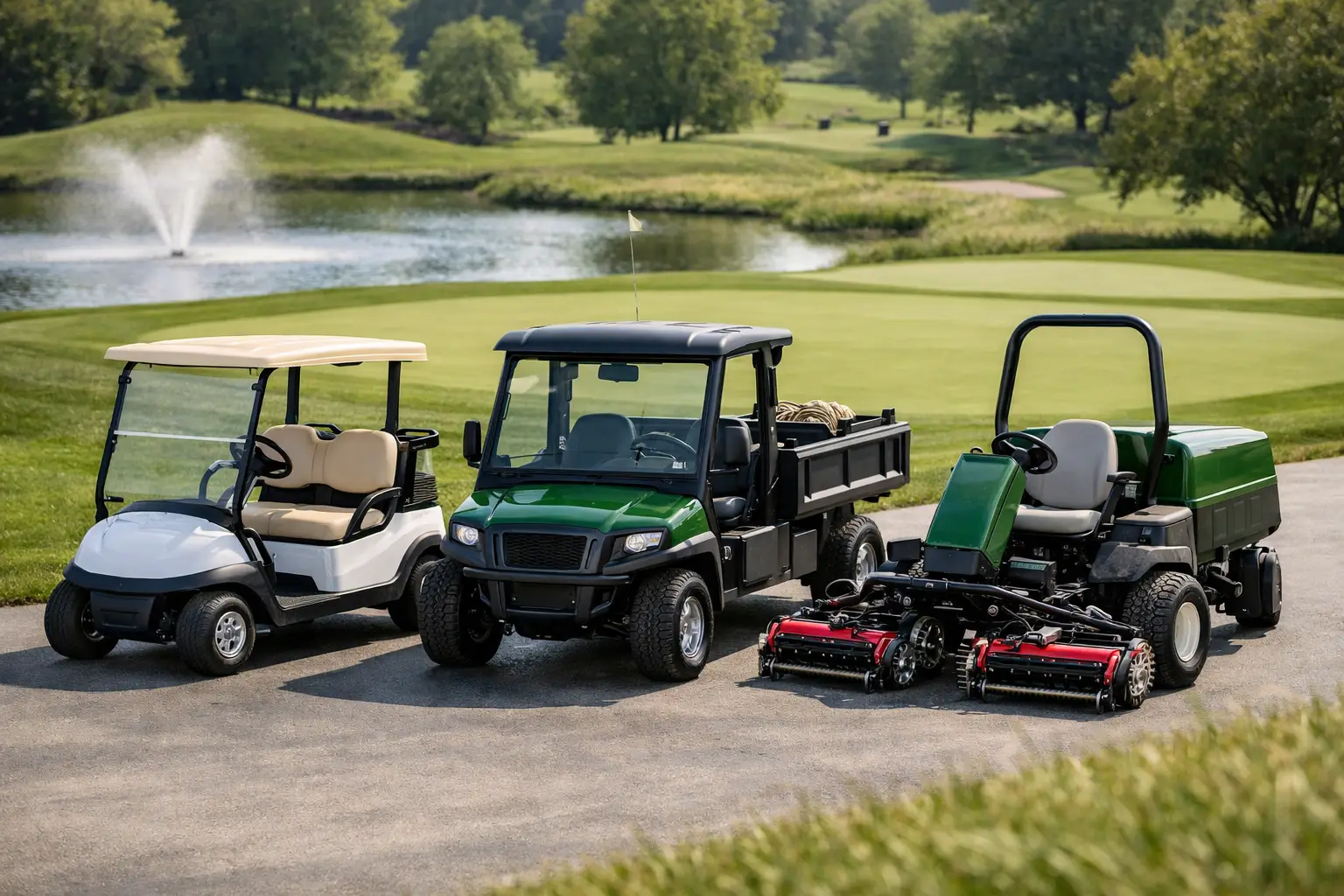
A busy golf property can feel the strain of a weak fleet fast. When a marshal cart is down, beverage service runs late, or maintenance crews keep rotating unreliable units, the problem shows up in guest experience and labor costs. That is why golf course fleet vehicles should be chosen as operating assets first and simple transportation second.
What golf course fleet vehicles need to do
A golf course rarely needs one type of vehicle. It needs a fleet that works across very different jobs, often on the same day. Player transportation has to be clean, quiet, and dependable. Maintenance units need payload capacity, towing strength, and room for tools. Food and beverage carts have to support service speed without creating constant charging or fuel stops.
That mix matters because the wrong vehicle spec creates problems that do not show up on a sales sheet. A cart that looks fine for path use may struggle with hills, repeated stop-and-go operation, or the added weight of staff equipment. A utility vehicle with enough power may still be a poor fit if the cargo bed is too small or the turning radius is too wide for tight service areas.
For most operators, the real question is not just what a vehicle can do. It is whether the fleet as a whole keeps the course moving without adding friction for staff, guests, and management.
Start with fleet roles, not just unit count
One of the most common buying mistakes is treating every unit like a variation of the same cart. Golf course fleet vehicles work better when they are assigned by role. That means separating guest-facing vehicles from operations vehicles before comparing models.
Guest fleet units usually need comfort, clean presentation, and consistent battery performance over a full day of tee times. These vehicles are part of the customer experience. They reflect the quality of the property, especially at private clubs and resort courses where appearance matters as much as function.
Operations vehicles have a different job. Grounds teams may need heavier-duty utility beds, better suspension, and stronger braking, especially on courses with elevation changes. Housekeeping, security, tournament staff, and food service often sit somewhere in the middle. They need maneuverability and uptime, but not always the same passenger or cargo setup.
When you define each role first, it becomes easier to avoid overbuying in one area and underbuying in another. That usually leads to a better fleet mix and fewer idle vehicles.
Electric or gas depends on how the course operates
There is no universal winner between electric and gas. It depends on terrain, usage patterns, maintenance resources, and how the property handles refueling or charging.
Electric vehicles are a strong fit for many golf properties because they are quieter, easier for guests to accept, and often less demanding in day-to-day maintenance. For player transportation and light-duty staff use, they make sense when the course has a realistic charging plan. If the property can rotate units overnight and keep charging infrastructure organized, electric fleets can perform very well.
Gas vehicles still have a place, especially for heavier utility work or longer operating windows where stopping to charge is not practical. Courses with demanding maintenance schedules, rougher terrain, or limited charging infrastructure may prefer gas for certain parts of the fleet. The trade-off is noise, emissions, and a different maintenance profile.
Many properties land on a mixed fleet. Electric units serve golfers and front-of-house needs, while gas or higher-output utility vehicles handle heavier operational work. That is often the most practical answer, especially for courses balancing guest comfort with back-of-house demands.
The specs that matter most in daily use
Fleet decisions usually get better when buyers focus less on brochure language and more on operating reality. Battery range matters, but so does how range changes when a cart is carrying two golfers, climbing hills, or running all day in heat. Payload ratings matter, but they only help if the bed design actually supports the tools and materials crews use.
Ground clearance is another detail that gets overlooked. A course with uneven service paths, rough maintenance areas, or seasonal washouts may need more clearance and stronger tires than a flat club environment. Suspension, braking, and steering feel also matter more than buyers sometimes expect. Staff use these vehicles every day. Driver fatigue and poor handling affect productivity over time.
Then there is charging time, parts access, and warranty support. These are not exciting topics, but they often decide whether a fleet is easy to own. A slightly lower purchase price can disappear quickly if replacement parts are hard to source or service delays leave units parked during peak periods.
Why service support should influence the purchase
A golf course does not just buy vehicles. It buys future service needs. That is where many fleet decisions either hold up or become frustrating six months later.
Reliable golf course fleet vehicles still need maintenance, battery care, tires, brakes, and occasional warranty work. If support is slow or disorganized, the course ends up carrying extra downtime, backup unit pressure, and staff workarounds. That gets expensive, even if it does not show up immediately as a line item.
For that reason, service coverage should be part of the buying conversation from the start. Ask how warranty claims are handled, what common parts are stocked, how quickly repairs are typically turned around, and whether support is available for larger multi-unit accounts. Buyers in markets that need cross-border logistics or quick shipping should pay even closer attention here.
A family-owned dealership with real inventory depth can be a major advantage because availability and responsiveness matter just as much as the vehicle itself. That is one reason commercial buyers work with providers that can support both the sale and the ownership cycle.
Appearance matters more than many operators admit
It is easy to think fleet decisions are mostly mechanical, but on a golf property, presentation matters. Worn-out guest carts make players question the quality of everything else, from course maintenance to clubhouse service. The fleet becomes part of the brand.
That does not mean every course needs luxury specs across the board. It does mean that consistency matters. Matching fleet style, clean bodywork, comfortable seating, and dependable operation create a better first impression. If the property hosts tournaments, weddings, member events, or resort guests, those details become even more visible.
For utility units, appearance matters differently. A clean, organized service fleet signals professionalism. It tells members, guests, and ownership that operations are under control.
Buying new, used, or a mix
Not every course needs an all-new fleet. In some cases, a blended approach makes more sense. New units may be the right choice for guest-facing fleets where reliability, battery life, and appearance matter most. Quality used vehicles can be a smart option for secondary roles, seasonal support, or departments with lower daily mileage.
The key is being honest about risk tolerance. Used units can lower upfront cost, but condition, battery age, and service history matter a lot. A lower purchase price is only a win if the vehicles stay available and do not create a repair backlog.
For operators trying to control capital spending, the best answer is often a staged replacement plan. Replace the highest-visibility or highest-use units first, then cycle the rest of the fleet in phases. That keeps operations stable and avoids a single large disruption.
How resorts and destination courses should think differently
Properties in resort-driven markets often need more from their fleet than a standard local course. Guest expectations are higher, turnover can be faster, and vehicle presentation is under more scrutiny. Courses in places like Cabo San Lucas and San Jose del Cabo may also deal with coastal conditions, seasonal demand swings, and the need for quick vehicle replacement during busy periods.
That changes the buying equation. Corrosion resistance, dependable inventory access, and fast service support become more important. So does the ability to source multiple vehicle types from one provider instead of managing separate vendors for guest carts, utility vehicles, and personnel transport.
For buyers who need that kind of support, working with an experienced dealership such as Coyne Carts can reduce delays and simplify fleet planning, especially when inventory access and after-sale service are part of the decision.
The right fleet is the one that reduces friction
A good fleet does not call attention to itself. Golfers get where they need to go. Staff finish their work without delays. Managers spend less time dealing with downtime, charging gaps, or emergency repairs. That is the standard worth buying toward.
If you are evaluating golf course fleet vehicles, focus on the daily workload, not just the sticker price. Match each unit to its role, be realistic about service support, and choose vehicles that fit the property you run now, not the one described in a generic catalog. The right decision usually feels less like buying carts and more like removing obstacles from the entire operation.