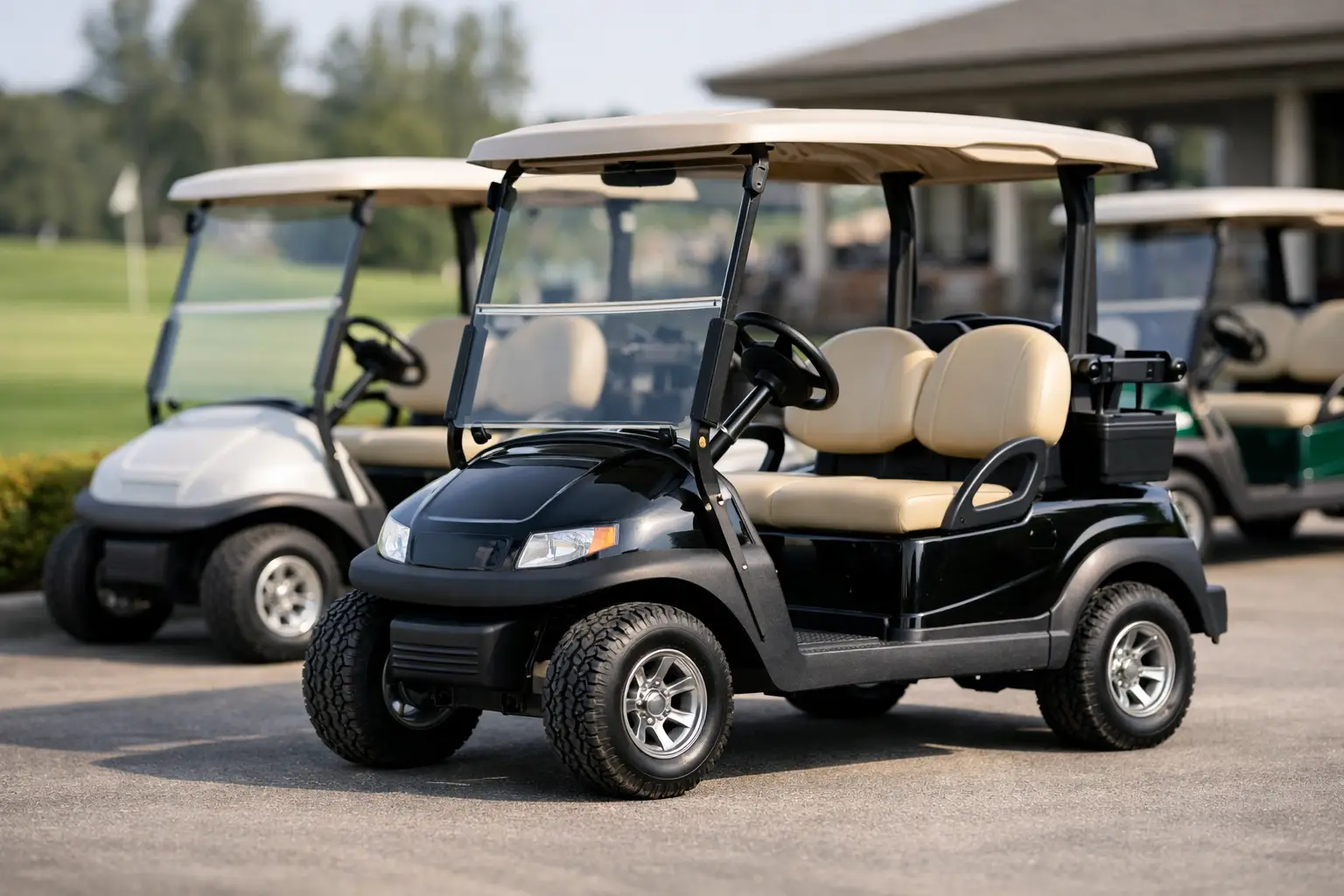
A rental cart that looks good on day one but spends week three in the service bay is not a business asset. For operators who depend on uptime, the right golf cart rental business vehicles need to do more than move people around. They need to hold up to heat, salt air, frequent charging, stop-and-go use, and a steady stream of drivers who will not treat them like their own property.
That is why buying for a rental fleet is different from buying for personal use. The right choice comes down to durability, battery performance, passenger capacity, parts availability, and how quickly you can get support when something needs attention. If you run a resort, golf facility, residential community, tour operation, or beachside property, those details affect revenue every day.
What rental operators actually need from a fleet
A private owner can live with a few compromises. A rental business usually cannot. When one vehicle goes down, you are not just dealing with a repair. You are dealing with a missed booking, an unhappy guest, and extra pressure on the rest of the fleet.
The first priority is reliability. That sounds obvious, but reliability in a rental setting means more than whether a cart starts in the morning. It means the brakes hold up under repeated use, the suspension can handle uneven surfaces, the seats and upholstery can take constant turnover, and the charging system stays predictable across a full fleet.
The second priority is standardization. A mixed fleet may seem flexible, but it often creates more headaches than it solves. Different battery systems, different parts, and different service procedures slow down maintenance and increase stocking costs. Most operators are better served by choosing a narrow range of models that match their use case.
The third priority is guest-friendly design. Easy entry, comfortable seating, simple controls, and enough storage matter more in a rental environment than flashy upgrades. If a vehicle is intuitive to use, turnover is faster and damage claims tend to drop.
Choosing golf cart rental business vehicles by use case
Not every rental operation needs the same vehicle. A beach resort moving guests and luggage has different needs than a golf course beverage fleet or a property manager handling maintenance runs.
Two-passenger carts
Two-seat carts work best when the rental is short-term, personal, and light-duty. They are easier to maneuver, easier to charge, and usually less expensive to maintain. For golf facilities, gated communities, and simple guest transportation, they often provide the best return per vehicle.
The trade-off is obvious. They limit flexibility. If your guests commonly travel in pairs plus children, coolers, or bags, a two-seater can create friction right away.
Four-passenger carts
For many operators, this is the sweet spot. Four-passenger carts are practical for resorts, vacation properties, and general rental use because they cover the broadest range of customer needs. They are large enough to feel useful but still compact enough for easy parking and fleet management.
If you are only going to standardize around one category, this is often the safest place to start. Demand tends to be stronger, and resale remains healthier because the market for four-passenger units is broad.
Six-passenger carts
Six-seaters make sense when your business depends on family travel, group movement, or shuttle-style use. They can increase revenue per booking because customers pay for capacity and convenience. In hospitality-driven markets, that can be a real advantage.
Still, bigger is not automatically better. Six-passenger units require more storage space, more charging room, and more attention to tire wear and braking. On tighter properties, they can also be less practical than they look on paper.
Utility and commercial vehicles
Some rental businesses also need support units behind the scenes. Utility vehicles are useful for housekeeping, landscaping, maintenance, and baggage support. If your operation serves resorts or multi-use properties, combining passenger vehicles with a few utility models can make the whole business run more efficiently.
Electric, gas, and street-legal options
Power choice affects operating cost as much as purchase price. In most hospitality and resort settings, electric remains the preferred option because it is quiet, clean, and more appealing to guests. It also fits properties where noise and emissions matter.
Electric fleets do require discipline. Charging routines need to be consistent, battery care matters, and poor storage habits can shorten lifespan. But when the fleet is managed correctly, electric vehicles often make the most sense for rental use.
Gas vehicles can still work well in heavier-duty environments or larger properties where long run times matter more than quiet operation. They are often easier to refuel quickly, but they bring added noise, fuel handling, and more mechanical service points.
Street-legal low-speed vehicles deserve separate consideration. If your customers need to travel on approved local roads, a true street-legal unit may be the better fit than a standard golf cart. That decision depends on local regulations, insurance requirements, and how the vehicle will actually be used. It is not an upgrade for every fleet, but for some operators it opens a more valuable rental category.
The features that matter more than flashy upgrades
Roofs, windshield options, storage setups, and rear-facing seats can all add value if they match your actual customer use. The key is to avoid paying for features that do not improve rental demand, vehicle life, or ease of service.
Service support is part of the vehicle decision
This is where many fleet purchases go sideways. Operators compare sale prices closely, then treat service as an afterthought. In a rental business, that is backwards.
What matters is not just the cost to buy the vehicle. It is how quickly you can get parts, how warranty claims are handled, whether service support is responsive, and how much downtime you should realistically expect. A slightly cheaper unit can become the expensive one if replacement parts are slow or warranty coverage is vague.
For buyers in tourism-heavy and coastal markets, support matters even more. Salt air, high occupancy use, and year-round operation can wear vehicles faster than occasional private use. Working with a dealer that understands fleet demands, keeps inventory moving, and can support both sales and after-sale needs saves time and protects revenue.
That is one reason many commercial buyers prefer a dealership relationship over piecing together vehicles from multiple sources. With one supplier, the paperwork is simpler, the equipment is more consistent, and the support path is clearer. Coyne Carts works with buyers who need that kind of straightforward process, especially when inventory access and fast delivery are part of the decision.
How to think about return on investment
The cheapest cart is rarely the best fleet buy. A better question is how much revenue a vehicle can generate before major repair costs begin to eat into margins.
If a more reliable cart stays rented, needs fewer service calls, and holds resale value longer, the higher upfront cost may be justified. On the other hand, if your business is seasonal and usage is light, a simpler setup may be the smarter move.
It depends on utilization. High-turn fleets should lean toward durability and serviceability. Lower-volume operators may care more about purchase cost and visual appeal. Neither approach is wrong, but the fleet has to match the business model.
It also helps to think in terms of lifecycle planning. Many operators wait too long to refresh aging units, then absorb more maintenance expense than necessary. A healthy fleet strategy includes replacement timing, parts planning, and a realistic maintenance schedule from the start.
Buying with growth in mind
If you expect to add units later, plan for that now. Choose models you can reorder, battery systems you can maintain consistently, and vehicle classes that fit your property layout over time. Growth becomes much easier when your original fleet was selected with expansion in mind.
This is especially true for operators serving resorts, residential communities, and vacation markets in places like Cabo San Lucas or San Jose del Cabo, where customer expectations are high and downtime is noticeable. Guests may not care what brand is under the canopy, but they absolutely notice when a vehicle feels tired, noisy, or unreliable.
A good fleet should make your business easier to run, not harder. That means selecting vehicles that fit the property, the customer, and the support structure behind the sale.
The best golf cart rental business vehicles are not just the ones that look ready for service. They are the ones that keep showing up for it, day after day, with fewer surprises and more earning time where it counts.