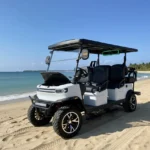

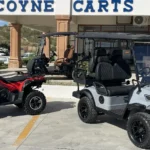
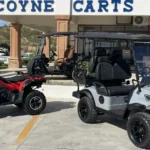

How to Shop Featured Vehicle Inventory Online
October 23, 2026
Shop featured vehicle inventory online with confidence. Compare seating, power, warranties, delivery, and service support before you choose a vehicle.


A low-speed vehicle can be an excellent way to get around a resort community, coastal neighborhood, golf course, or large property. But LSV registration requirements are where many buyers discover that a vehicle described as “street legal” is not automatically ready for every public road. Registration depends on the vehicle, its paperwork, its equipment, and the rules where it will be titled and driven.
For buyers considering a new or used LSV, the best time to verify those details is before delivery. A little preparation can prevent a frustrating DMV visit, unexpected equipment costs, or a vehicle that cannot legally operate on the roads you use most.
An LSV, or low-speed vehicle, is a federally defined vehicle class in the United States. It is generally designed to travel more than 20 mph but no more than 25 mph on level ground. You may also hear these vehicles called neighborhood electric vehicles, or NEVs.
That definition matters because an LSV is different from a standard golf cart. A basic golf cart is usually intended for private property, golf courses, and other off-road uses. It may not have a vehicle identification number, safety equipment, or manufacturer documentation needed for registration. An LSV is built and equipped for limited public-road use, subject to state and local law.
A cart can look like an LSV without qualifying as one. Headlights or a windshield alone do not make it registrable. Before you buy, confirm whether the vehicle was manufactured and certified as an LSV, rather than assuming an upgraded golf cart will receive a plate.
Every state has its own DMV process, but most LSV registrations start with the same set of documents. The exact forms and fees vary, so check with the DMV in the state where the vehicle will be principally garaged and operated.
For a new LSV, you will commonly need a manufacturer’s certificate of origin, often called an MCO or MSO, plus a detailed bill of sale. The certificate establishes that the vehicle was manufactured as an LSV and identifies its vehicle identification number. The bill of sale should clearly show the buyer, seller, purchase price, vehicle description, and VIN.
For a used LSV, the title is usually the key document. Confirm that the VIN on the title matches the VIN physically stamped or affixed to the vehicle. If the title is missing, branded, signed incorrectly, or issued for a different vehicle type, resolve that issue before money changes hands. Replacing or correcting title documents after a cross-state purchase can take time.
Most registration offices will also require proof of identity, proof of address, an application for title and registration, and payment for taxes and fees. If you are registering a vehicle under a business name, expect to provide business documentation and authorization for the person signing the paperwork.
Keep clean copies of every document, including financing paperwork and any trade-in agreement. Organized records help if a registration clerk asks for clarification or if the vehicle is later sold, insured, or transferred to another state.
Federal LSV standards require specific safety equipment. A qualifying LSV generally needs headlights, taillights, brake lights, turn signals, reflectors, mirrors, a parking brake, a windshield, seat belts, and a VIN. It must also meet applicable federal safety standards for low-speed vehicles.
States can add their own requirements. Some states require a windshield wiper if the vehicle has a windshield, while others may require a horn, a certain type of mirror, or additional lighting. Registration may also depend on tire condition, working turn signals, seat belt operation, and visible VIN placement.
Do not treat accessories as cosmetic when they affect compliance. A lifted suspension, oversized tires, added seating, altered lighting, or modified speed controller can create questions during an inspection or claim. Modifications are not always prohibited, but they should be compatible with the vehicle’s legal classification and insurer requirements.
If a vehicle is advertised as street legal, ask what that means in practical terms. Does it have the required federal labeling? Is it already titled as an LSV? Does it include the documents your state DMV expects? Those answers are more useful than a general sales description.
Many states require liability insurance before an LSV can be registered for public-road use. The coverage limits, policy type, and proof required at registration differ by location. Not every insurer writes policies for low-speed vehicles, so contact an insurance provider before pickup rather than assuming your auto policy covers the purchase.
An inspection may be required when registering an LSV, especially if it is used, brought in from another state, or has never been titled. The inspection may verify the VIN, safety equipment, emissions exemption status, or overall roadworthiness. In some areas, inspections are handled by the DMV; in others, they are completed by an authorized inspection station or law enforcement office.
A clean title does not necessarily eliminate the inspection requirement. Likewise, an inspection does not guarantee that the vehicle may travel on every street. Registration, insurance, and road access are related but separate issues.
The road-use rules are often the deciding factor for buyers. In many states, LSVs may operate only on roads with posted speed limits of 35 mph or lower. Some jurisdictions allow crossing a higher-speed road at an intersection, while others set more restrictive local rules.
Cities, counties, master-planned communities, and resort areas may impose additional restrictions. They can limit LSV access on certain streets, require local permits, restrict nighttime use, or establish designated routes. A state registration plate does not override a local prohibition.
Before purchasing, map your actual trips. Consider the route from your home to the grocery store, beach access, clubhouse, marina, or workplace. A short trip may look practical until it requires entering a road posted above the local LSV limit. This is especially relevant in fast-growing coastal communities where road classifications can change.
For buyers in Baja California Sur or other Mexican destinations, do not assume U.S. LSV rules apply. Mexican registration and road-use requirements are handled differently, and municipal enforcement can vary. Confirm the applicable local process before operating a vehicle on public roads in Cabo San Lucas, San Jose del Cabo, La Paz, Loreto, or Los Barriles.
A new LSV from a qualified dealership usually offers the cleanest paperwork path because the buyer receives original manufacturer documentation. It can also make warranty registration and insurance easier. The trade-off is a higher purchase price compared with a private-party used vehicle.
Used vehicles can be a strong value when the title, VIN, condition, and battery system have been verified. Ask whether the vehicle has been registered before, where it was titled, and whether any modifications were made. A low purchase price loses its appeal quickly if missing documents prevent registration.
Cross-border and out-of-state purchases require extra planning. Import rules, tax obligations, title transfer procedures, and shipping paperwork may all apply. The state where you live may require an out-of-state VIN inspection even when the vehicle has a valid title elsewhere. For commercial buyers, verify whether the vehicle will be titled individually, as part of a fleet, or under a business entity before placing the order.
Coyne Carts works with buyers who need clear vehicle information, delivery coordination, and support after the sale. Whether you are purchasing one vehicle for a second home or building a resort fleet, ask for the paperwork details early and keep registration requirements part of the buying conversation.
Before committing to an LSV, confirm the vehicle is identified as an LSV or NEV on its manufacturer documentation, verify the VIN matches every document, and ask your local DMV what forms it requires. Contact an insurer for a quote, then review the roads you plan to use and any community rules that apply.
That short check protects more than your registration appointment. It helps ensure the vehicle you choose is the right fit for how and where you actually plan to drive it.