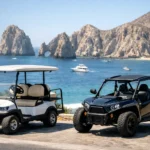
A golf cart that feels quick and capable on level pavement can struggle the moment it meets a steep driveway, resort path, or hillside road. So, can golf carts climb hills? Yes, many can – but the answer depends on the grade, the vehicle’s power system, passenger load, tires, and how the cart is equipped.
For buyers in Cabo San Lucas, San Jose del Cabo, and other areas with elevation changes, this is more than a technical question. A cart needs to get people, gear, and groceries uphill reliably without losing speed, overheating components, draining the battery prematurely, or creating a safety concern on the way back down.
Can Golf Carts Climb Hills Safely?
Most modern golf carts can handle modest hills without trouble when they are correctly matched to the terrain. A well-maintained 48-volt electric cart, especially one with lithium batteries and an AC motor, can provide strong low-speed torque for neighborhood roads, golf-course paths, and typical resort property grades. Gas carts can also perform well on hills, particularly when they are carrying heavier loads or traveling longer distances between refueling.
The key word is modest. Not every cart is designed for a long, steep climb. A basic fleet cart with aging lead-acid batteries and four adults aboard may make it up a hill, but it may do so slowly and put unnecessary stress on the electrical system. A lifted cart with oversized tires can look ready for rugged terrain while actually losing some hill-climbing power if the gearing and controller were not upgraded to match.
A capable cart should climb under normal use without repeated hesitation, excessive speed loss, burning smells, warning lights, or a major drop in range. If a route includes sharp grades every day, choose the vehicle around that route rather than assuming any cart will be sufficient.
Grade Matters More Than the Hill’s Length
Hills are measured by grade, which is the vertical rise compared with the horizontal distance traveled. A 10% grade rises 10 feet for every 100 feet forward. It may not look dramatic from the bottom, but it is a meaningful demand on a golf cart, especially with passengers.
Many standard carts are comfortable on gentle grades around 5% to 10%, provided the batteries are healthy and the cart is not overloaded. Grades above that deserve closer attention. A short, paved 15% driveway is different from a long, loose-surface 15% hill with turns, washboard, and multiple passengers. Surface traction, heat, and the need to stop and restart all change the equation.
If you are shopping for a cart for a specific property, do not describe the hill as simply “steep.” Take a photo, measure the grade if possible, and note the surface, length, turns, and typical load. This gives a dealership a much clearer picture of the vehicle configuration you need.
What Determines How Well a Golf Cart Climbs
Hill performance comes from a system, not one feature on a spec sheet. These four factors have the greatest effect.
- Battery voltage and condition: A 48-volt system generally delivers better hill-climbing capability than a comparable 36-volt setup. Battery condition is just as important. Weak lead-acid batteries can show a full charge yet lose voltage quickly under the heavy demand of an uphill climb.
- Motor, controller, and gearing: Torque is what gets a cart moving uphill. AC-drive systems, higher-capacity controllers, and properly selected gears can improve low-speed pulling power. Some speed-focused upgrades do the opposite, prioritizing top speed over climbing torque.
- Vehicle weight and payload: Every passenger, cooler, bag, cargo box, and accessory adds demand. A six-passenger cart can be ideal for a resort or family property, but it needs enough power for its expected passenger load and the terrain it will cover.
- Tires and surface conditions: Tires need adequate grip, but larger tires are not automatically better. Oversized tires can reduce effective torque unless the cart has been modified for them. Loose gravel, sand, wet pavement, and uneven terrain can make a manageable hill much more difficult.
Electric vs. Gas Carts on Hills
Electric carts are often an excellent choice for hilly residential and hospitality use. They are quiet, easy to operate, and have immediate torque at low speeds. Lithium battery systems are especially attractive because they maintain voltage well under load, recharge efficiently, and typically weigh less than a bank of lead-acid batteries.
That does not mean every electric cart is the right choice for every hill. Battery capacity determines range, and repeated climbing uses more energy than flat driving. A cart that can cover a large property on level ground may have substantially less practical range when it climbs throughout the day.
Gas carts offer long operating time and quick refueling, which can be useful for commercial operations, large properties, or locations where charging access is limited. They can be a practical option for utility work and all-day use. However, they are louder, require fuel and engine maintenance, and may not be the preferred fit for quiet resort paths or gated communities with rules favoring electric vehicles.
For many buyers, the best choice is a 48-volt lithium electric cart with enough seating, cargo capacity, and torque for the actual route. The right answer still depends on the hill and how the cart will be used.
Why Lithium Batteries Can Make a Noticeable Difference
A lithium conversion or factory-equipped lithium cart can improve climbing confidence because lithium batteries tend to hold their voltage more consistently during acceleration and heavy load. With lead-acid batteries, voltage sag can make a cart feel less responsive as charge levels fall. On a hill, that difference becomes obvious.
Lithium batteries also reduce vehicle weight, which helps efficiency. They require less routine maintenance than flooded lead-acid batteries, with no water levels to check. The upfront cost is higher, so the decision makes the most sense for owners who use their cart frequently, need dependable range, or want lower maintenance over time.
Battery quality and installation matter. A properly matched lithium system should include compatible charging equipment and battery management protection. Avoid treating batteries as a simple add-on. They are central to the cart’s performance, range, and long-term reliability.
Downhill Control Is Just as Important
A cart that can climb a hill also needs to descend it safely. This is where many buyers focus too much on horsepower and not enough on brakes, stability, and speed control.
Keep the cart at a controlled speed on every downhill section. Avoid coasting in neutral, which removes much of the driver’s control and can create a dangerous situation. Use the brake pedal smoothly, keep both hands on the wheel, and do not overload the rear-facing seat or cargo area.
Regenerative braking, available on some electric models, can help slow the cart while returning some energy to the battery. It is a useful feature, but it is not a substitute for properly maintained brakes. Brake cables, pads, drums, tires, suspension, and steering all deserve regular service when a cart routinely travels on grades.
Lift kits require extra consideration on hilly routes. Added ground clearance is useful for rough roads and uneven terrain, but lifting raises the center of gravity. Choose a quality suspension setup, maintain the correct tire pressure, and avoid sharp turns or side-hill travel at speed.
How to Choose a Cart for a Hilly Property
Start with the route, not the body style. Consider the steepest grade, the longest climb, the road surface, the number of passengers, and whether the cart will carry supplies or equipment. A two-seat cart used by one homeowner has very different needs than a six-seat resort shuttle making repeated uphill trips.
Common Questions About Golf Carts and Hills
Will a golf cart climb a steep driveway?
It may, but the result depends on the driveway’s grade, surface, and length, plus the cart’s battery condition and load. A 48-volt cart with healthy batteries is usually a better starting point than a basic 36-volt cart. For unusually steep driveways, request a recommendation based on the measured grade before buying.
Do bigger tires help a golf cart climb hills?
Not by themselves. Larger tires can improve ground clearance and traction on certain surfaces, but they also effectively change the gear ratio and may reduce wheel torque. Pair larger tires with the appropriate motor, controller, or gearing upgrades when hill performance is a priority.
Does carrying passengers make a big difference?
Yes. Extra people and cargo increase the power required to climb and the braking demand on descents. Select seating and power capacity based on the full load you expect most often, not only the number of seats you want.
A hillside route should not rule out owning a golf cart. It simply calls for an honest match between the terrain and the vehicle. Coyne Carts can help buyers compare available configurations, battery options, and seating layouts so the cart chosen for the property is ready to handle the road ahead.
At Coyne Carts And Powersports we only offer lithium golf carts with 48-60v and 105 – 205AH for improved climbing ability while obtaining longer distances between charges. Ready for a test drive? Give us a call today at 480-201-2983 or 800-546-9480.