
How to Shop Featured Vehicle Inventory Online
October 23, 2026
Shop featured vehicle inventory online with confidence. Compare seating, power, warranties, delivery, and service support before you choose a vehicle.


A guest waiting 15 minutes for a ride from the lobby to the beach notices. So does a maintenance manager walking tools across a large property because the utility vehicle is tied up moving luggage. Those everyday delays are where fleet mobility stops being a vehicle purchase and becomes an operations decision.
For resorts, golf courses, residential communities, rental operators, and service teams, the right fleet moves people and materials safely, quickly, and with less strain on staff. The wrong mix creates bottlenecks, unnecessary wear, and vehicles that sit unused because they do not fit the job.
The goal is not simply to buy more carts. It is to build a practical transportation system around the way your property actually operates.
Fleet mobility is the planned use of multiple vehicles to handle transportation across a property or service area. Depending on the business, that can include passenger golf carts, street-legal low-speed vehicles, utility carts, UTVs, and specialty vehicles for security, housekeeping, landscaping, maintenance, and guest transportation.
A resort may need six-passenger electric vehicles for guest shuttles, compact utility carts for housekeeping, and cargo-capable units for maintenance. A golf community may prioritize four-seat personal carts, security vehicles, and street-legal options for local roads where permitted. A contractor or marina operation may need utility vehicles that carry equipment over uneven terrain.
These vehicles may look similar from a distance, but their daily demands are different. Passenger capacity, cargo space, range, terrain, weather exposure, charging time, and local operating rules all affect which vehicle belongs in a fleet.
The fastest way to overspend on a fleet is to select vehicles before defining the work. Begin by looking at the routes your team runs every day: guest pickup loops, housekeeping rounds, maintenance calls, luggage runs, food service, security patrols, or transfers between buildings.
Ask how many passengers or how much equipment each route carries at its busiest point, not just on a quiet afternoon. A two-seat utility cart may work for a technician with hand tools, but it will not solve a recurring need to move two employees, ladders, parts, and supplies. In the same way, a six-passenger shuttle can improve guest flow but may be inefficient for small, frequent staff trips.
Route length matters just as much. A vehicle that performs well on a compact property can fall short on a spread-out resort or hilly community. Factor in stops, slopes, payload, air conditioning if equipped, and the fact that batteries do not perform identically under every operating condition.
For many operations, a mixed fleet is the sensible answer. Standardizing too aggressively can simplify purchasing, but it can also force employees to use passenger vehicles for work they were never designed to do. A few well-chosen vehicle categories usually serve a property better than one model trying to cover every task.
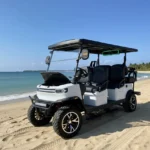
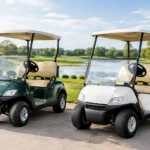
Passenger vehicles are designed around comfort, access, and capacity. Two-seat and four-seat carts work well for property managers, sales teams, homeowners, and short-distance transport. Six-seat models are often a stronger fit for resort shuttles, group transfers, and rental operations where moving more people per trip reduces wait times.
Utility vehicles should earn their place through payload and durability. Look for cargo beds, towing capability, ground clearance, suspension suited to your terrain, and storage that keeps tools or supplies secure. Landscaping and engineering teams often need a different configuration than housekeeping, even when both use electric vehicles.
Street-legal low-speed vehicles can extend fleet mobility beyond private property when local rules allow their use. They can be useful in resort corridors, planned communities, coastal areas, and service districts where employees or guests need a compliant vehicle for designated public roads. However, “street legal” does not mean legal on every road. Road speed limits, registration requirements, safety equipment, insurance, and local regulations must be verified before assigning these vehicles to public-road routes.
UTVs and ATVs fill another role entirely. They are often the better choice for rough terrain, large undeveloped properties, maintenance access roads, and demanding work environments. They are not interchangeable with golf carts, and choosing one over the other should come down to terrain, payload, duty cycle, and safety requirements.
Fleet size should reflect peak demand, backup needs, and maintenance coverage. A property that needs four shuttles in continuous use should not purchase exactly four and expect uninterrupted service. Scheduled maintenance, battery issues, tire repairs, and seasonal spikes are part of ownership.
At the same time, excess vehicles create their own cost. They require storage, charging capacity, inspections, insurance, and upkeep. The better question is not “How many vehicles can we buy?” It is “How many vehicles must be available during our busiest operating window?”
Track a few simple numbers before making a purchase: average trips per day, passengers per trip, busiest hours, route length, cargo needs, and how often staff wait for a vehicle. If your team is regularly sharing one cart between departments, that is useful evidence. If several units remain parked for days, that is evidence too.
Seasonality deserves special attention in hospitality markets. High-season occupancy can change the number of guest transfers, luggage runs, housekeeping trips, and maintenance calls dramatically. A year-round ownership plan may be right for core vehicles, while rental capacity can make more sense for temporary demand or special events.
An electric fleet is only dependable when charging is planned properly. Vehicles need designated charging locations with appropriate electrical capacity, protected parking, and a routine that fits operating hours. A cart left uncharged after a long shift is not a vehicle problem. It is a fleet process problem.
Battery choice also affects operations. Traditional lead-acid batteries can be a practical option for some applications, but they require regular care and correct watering procedures when applicable. Lithium batteries generally offer faster charging, lower maintenance, and more consistent performance, but they can increase the initial purchase price. The better option depends on usage, budget, maintenance discipline, and how long you plan to keep the fleet.
Service access should be considered before delivery, especially for businesses operating away from major population centers. Ask who will handle scheduled maintenance, warranty claims, replacement parts, tires, brakes, chargers, and battery service. A low purchase price loses its appeal quickly if a vehicle is down for weeks waiting on parts or qualified support.
Coyne Carts helps commercial buyers compare available vehicle types, arrange delivery, and plan for service and warranty support so fleet decisions are based on real operating needs rather than a catalog photo.
A mixed fleet does not have to mean a complicated fleet. Standardizing key components and vehicle types can make training, parts stocking, and daily operation easier. For example, selecting a consistent group of passenger vehicles for guest transport and a consistent utility platform for maintenance can reduce confusion for staff.
Standardization is especially useful when multiple employees use the same vehicles. Controls should be familiar, charging procedures should be clear, and inspection routines should be consistent. Keep a simple sign-out process so managers can see which department has each unit and identify recurring repair issues early.
Driver training matters too. Golf carts and low-speed vehicles are easy to operate, but they still require rules for passenger limits, speed, parking, loading, charging, and safe driving around pedestrians. On busy resort grounds, a courteous, well-trained driver is part of the guest experience.
Before committing to a fleet, make sure you can answer four practical questions:
Clear answers prevent the most common surprises after delivery. They also make it easier to compare vehicle quotes fairly, because you are comparing the full operating fit rather than focusing only on the purchase price.
The best fleet is rarely the largest or most expensive one. It is the one that gets guests where they are going, gives employees the tools to do their work, and stays ready when the property is at its busiest.