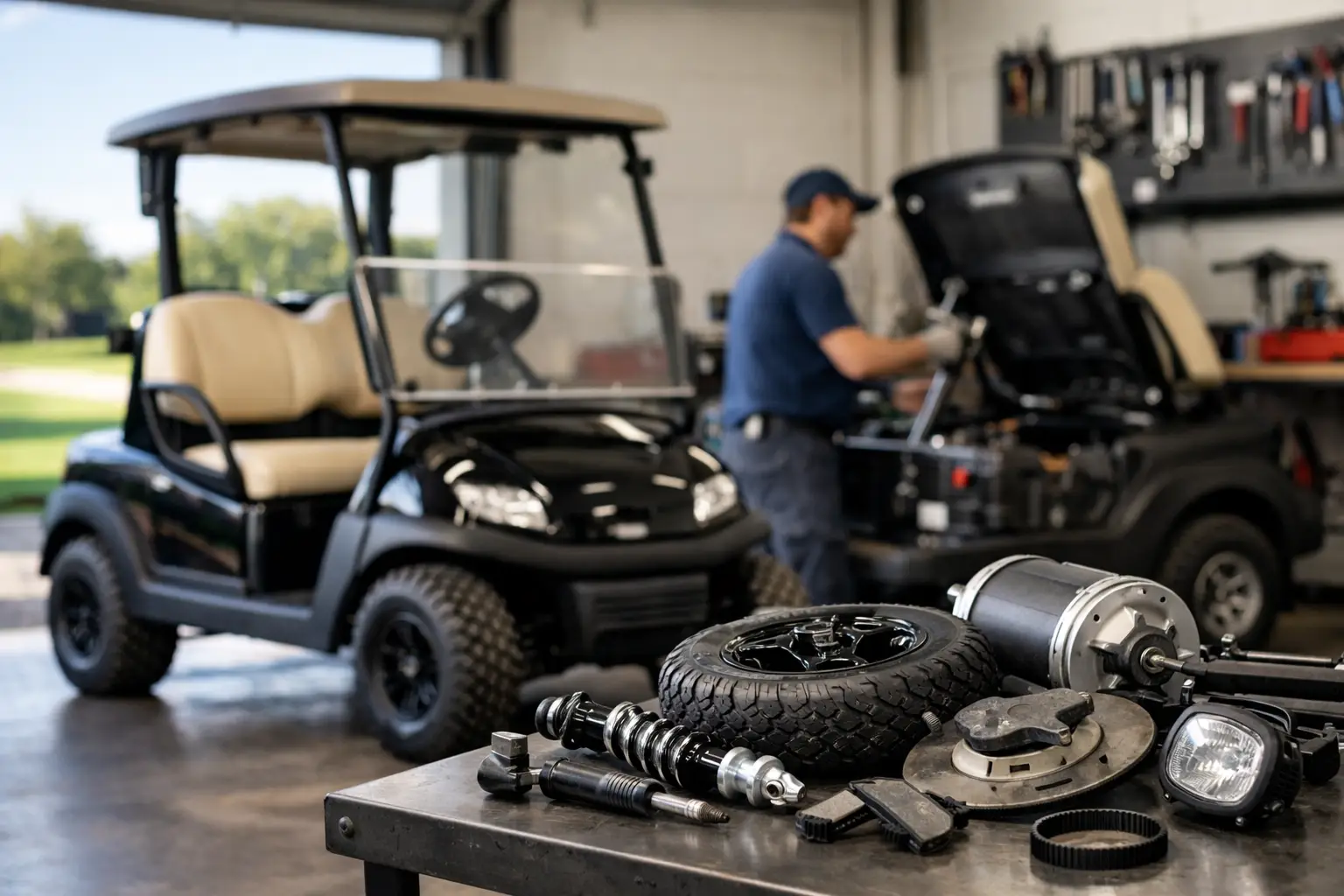
A cart that starts every morning but loses power halfway through the property is not reliable transportation. Whether you use a vehicle for neighborhood trips, resort guest transportation, golf operations, or maintenance work, dependable golf cart parts and service are what keep a minor issue from becoming a missed trip, frustrated guest, or expensive repair.
The right service plan is not about replacing parts for the sake of it. It is about inspecting the systems that wear first, choosing components that fit the vehicle and its workload, and fixing small problems before they take the cart out of service. For owners in coastal and resort areas, that also means accounting for heat, sand, humidity, salt air, hills, and frequent passenger loads.
What Golf Cart Parts and Service Should Cover
A quality service visit begins with more than a quick look at the battery gauge. A technician should consider the cart’s make, model, power source, age, passenger capacity, and daily use. A two-seat personal cart driven a few miles each week has very different needs than a six-seat resort shuttle operating throughout the day.
For electric carts, battery condition and the charging system are usually the first priorities. Weak batteries can create symptoms that feel like motor or controller trouble: slow acceleration, reduced range, dim lights, or a cart that struggles on an incline. Testing the pack, inspecting cable connections, checking water levels on serviceable lead-acid batteries, and confirming charger performance can identify the real cause before unnecessary parts are installed.
Gas-powered carts need their own routine attention. Fuel delivery, air filtration, oil condition, belts, spark plugs, and cooling components all affect how consistently the engine runs. A cart that hesitates under load may need a simple maintenance item, but leaving it unresolved can create more wear in the drivetrain.
Across both power types, a complete inspection should include brakes, steering, suspension, tires, lights, switches, body hardware, and safety features. Service is especially valuable when a cart carries families, guests, employees, tools, or supplies. Reliability and safe operation go together.
The Parts That Usually Need Attention First
Some components are designed to wear over time. Replacing them at the right interval is usually less costly than waiting for a roadside breakdown. The exact timing depends on usage, terrain, storage conditions, and vehicle quality, but these areas deserve regular attention:
- Batteries, battery cables, terminals, chargers, and charging receptacles on electric carts
- Brake shoes, cables, drums, brake fluid components, and parking brake hardware
- Tires, wheels, valve stems, suspension bushings, shocks, and steering parts
- Drive belts, clutches, filters, spark plugs, and fuel-system parts on gas models
- Light kits, turn signals, mirrors, horn systems, windshields, seat covers, and enclosure hardware
Not every cart needs OEM parts in every situation. Original-equipment components are often the best choice for fit, reliability, and warranty compatibility. Quality aftermarket parts can also be a practical option, particularly for older carts, common wear items, or upgrades. The key is matching the part to the vehicle’s specifications instead of buying based on appearance alone.
A low-priced battery cable with the wrong gauge, for example, can create heat and voltage-drop issues. An incorrect tire size may change ride quality, steering feel, clearance, and range. A replacement controller needs to be compatible with the motor, battery voltage, and vehicle setup. Good parts selection protects the systems around the part being replaced.
Why Preventive Service Saves More Than Repairs
The most expensive cart problems often begin as small, visible issues. Corroded terminals add resistance and shorten battery performance. A loose suspension component can cause uneven tire wear and wandering steering. A worn belt may slip before it breaks. A brake adjustment that is postponed can turn into a larger brake repair.
Preventive service also gives owners a clearer picture of operating costs. Instead of reacting to a vehicle failure, you can plan for tires, batteries, brake work, or seasonal maintenance before the cart is needed most. That matters for vacation homes, rental fleets, golf courses, resorts, and businesses that cannot afford to have several vehicles down at once.
For commercial owners, a maintenance schedule should be based on operating hours and daily use, not just a calendar date. A shuttle cart moving guests all day may need inspections far more often than a personal cart used on weekends. Fleet managers should keep service records for each unit, including battery test results, repairs, tire replacements, and reported driver concerns. Those records make it easier to spot repeat issues and make informed replacement decisions.
Coastal Conditions Change the Maintenance Plan
Cabo San Lucas and other Baja California Sur communities offer ideal cart-friendly lifestyles, but the environment can be hard on vehicles. Sand finds its way into floor areas, suspension components, brakes, and pedal assemblies. High temperatures can affect battery performance and tire pressure. Salt air accelerates corrosion on terminals, fasteners, connectors, and exposed metal.
Regular cleaning helps, but it should be done carefully. Avoid directing high-pressure water into electrical connections, controllers, chargers, bearings, or sensitive engine components. After cleaning, inspect battery compartments and undercarriage areas for trapped sand and moisture. Apply appropriate corrosion protection to terminals and exposed hardware where needed.
Storage habits matter as well. Electric carts should be parked with a charging plan that matches the battery type and charger recommendations. Leaving batteries deeply discharged for long periods can shorten their useful life. Gas carts should be stored with attention to fuel condition, battery charge, and tire inflation. If a vehicle sits seasonally, a pre-use inspection is smart before putting passengers back on board.
Signs Your Cart Needs Service Now
Do not wait for a total failure if the cart starts showing changes in performance. Reduced range, slower acceleration, squealing brakes, unusual vibrations, pulling to one side, clicking while turning, delayed charging, or dash warning lights all deserve attention.
Pay close attention to changes that occur only under load. A cart may drive normally with one person but struggle with four passengers, cargo, or a hill. That can point to tired batteries, weak cables, brake drag, an aging belt, or drivetrain issues. Describing when the problem occurs helps a service team diagnose the vehicle more efficiently.
A burning smell, hot battery cables, leaking batteries, smoke, or brake failure should be treated as immediate service issues. Stop operating the cart until it can be inspected. Continuing to drive may damage more expensive components and can create a safety risk.
Choosing a Service Partner for Personal Carts and Fleets
The lowest repair estimate is not always the best value. Ask whether the service provider can identify the correct parts, explain what failed, provide a realistic timeline, and stand behind the work. For newer vehicles, warranty knowledge is equally important. Unauthorized modifications or incompatible parts can complicate future warranty claims.
For fleet customers, look for a dealership that can support more than one repair at a time. Parts availability, technician capacity, clear communication, and access to replacement vehicles can make a major difference during a busy season. A resort or rental operator may also benefit from standardizing tire types, batteries, accessories, and maintenance intervals across the fleet.
Coyne Carts supports customers with vehicle sales, parts, service, warranty assistance, and fleet solutions, helping owners avoid the hassle of sourcing vehicles and support from multiple providers. That one-dealership relationship is especially useful when carts are used for guest transportation, property operations, or daily personal mobility.
A Simple Maintenance Routine Between Service Visits
Owners do not need to be technicians to catch common issues early. Before regular use, check tire condition, steering response, brake feel, lights, charging connections, and any signs of fluid leaks or corrosion. Keep the cart clean, listen for new noises, and do not ignore a noticeable drop in range or power.
The goal is simple: keep the vehicle dependable enough that it is ready when you need it, not just when it happens to start. Consistent attention to the right parts and timely service keeps your cart safer, protects its resale value, and gives every passenger a better ride.