A vehicle that feels perfect on a narrow desert trail can be the wrong choice for hauling supplies around a resort, ranch, or coastal property. The ATV versus UTV decision comes down to how you will actually use the machine: who needs to ride in it, what needs to be carried, where it will travel, and how often it will work.
Both vehicle types are capable off-road tools. Both can be fun, productive, and dependable when matched to the right job. The mistake is buying based only on engine size, price, or appearance. Start with your daily needs, then choose the platform that makes those needs easier.
ATV Versus UTV: The Core Difference
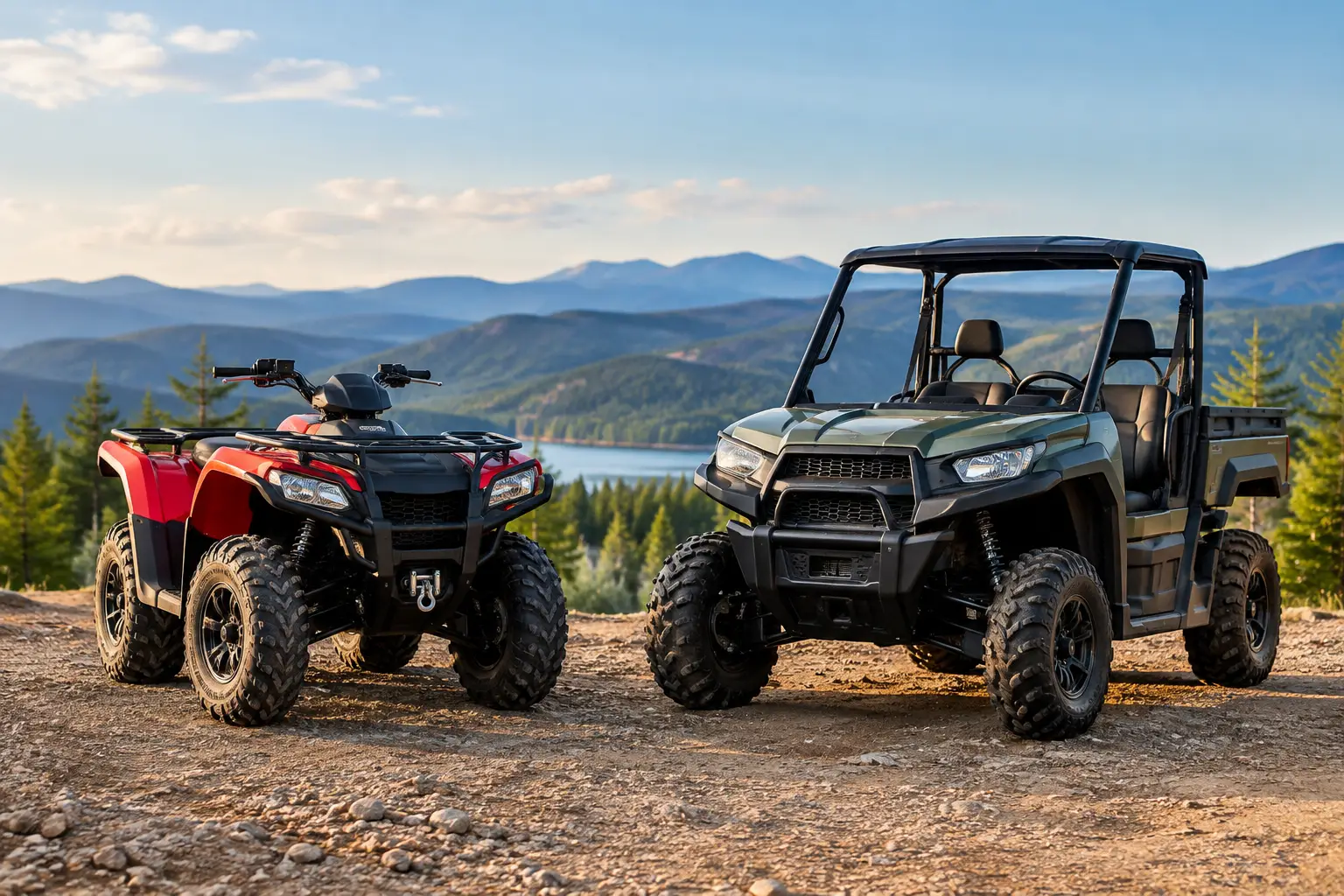
An ATV, also called a quad or four-wheeler, is typically built for one rider, although some models include a passenger seat. The rider sits astride the vehicle and steers with handlebars. ATVs are compact, light, and highly maneuverable, making them well suited for single riders who want to cover uneven ground, access tight trails, or work in places where a wider vehicle will not fit.
A UTV, often called a side-by-side, has side-by-side seating, a steering wheel, seat belts, and usually a protective frame or cab structure. Most have two to six seats and a cargo bed. They are wider and heavier than ATVs, but they offer more passenger capacity, more storage, and a more familiar driving position.
That difference shapes nearly every buying decision. If the vehicle is primarily for one person riding trails or checking fences, an ATV may be the practical answer. If it needs to move guests, tools, luggage, landscaping supplies, or a work crew, a UTV usually makes more sense.
Choose an ATV for Access, Agility, and Solo Riding
An ATV shines when space is limited. Its narrow footprint can make a real difference on tight trails, through brush, around large properties, and on terrain with sharp turns or changing elevation. A lighter machine can also be easier to trailer, store, and maneuver by hand when needed.
For recreational riders, an ATV provides a more direct connection to the terrain. The rider shifts body position to help control the machine through turns, climbs, and uneven sections. That can be a major part of the appeal, especially for experienced riders who enjoy technical trails.
ATVs can work hard, too. Utility models may have front and rear racks, towing capability, and available accessories for ranch, landscaping, or property maintenance work. They are useful for transporting smaller loads, checking irrigation, carrying hand tools, or getting to remote areas quickly.
The trade-off is comfort and carrying capacity. Most ATVs are designed around a single rider. Adding passengers, especially on a model not designed for them, reduces comfort and can affect safety and control. Cargo is generally secured to racks rather than protected in a dump bed, and the rider is more exposed to heat, dust, rain, and wind.
An ATV is a strong fit when your priority is trail access and individual use, not transporting a group or carrying large equipment.
Choose a UTV for People, Cargo, and Daily Work
A UTV is often the better choice for buyers who need a vehicle to serve more than one purpose. The bench or bucket-style seating, seat belts, steering wheel, and foot pedals make it approachable for drivers who are comfortable in a car, truck, or golf cart. For homeowners, resort operators, and commercial teams, that familiarity matters.
The cargo bed is another major advantage. A UTV can carry tools, coolers, landscaping materials, maintenance equipment, or supplies that would be awkward to secure on an ATV. Many models also offer towing capability for trailers, sprayers, or other equipment. Exact payload and towing limits vary by model, so buyers should review the manufacturer specifications before planning regular heavy-duty work.
Passenger capacity is where UTVs pull ahead. Two-seat models work well for couples, property managers, and maintenance teams. Four-seat and six-seat models are practical for families, resort transportation, guided tours, and crews that need to arrive together. Rather than making multiple trips, the right UTV can move people and gear in one trip.
Comfort is also a deciding factor in hot, dusty, or wet environments. Depending on the model, UTVs may be available with roofs, windshields, doors, cab enclosures, heaters, air conditioning, and upgraded suspension. Those features add cost, but they can make the vehicle far more useful throughout the year.
The compromises are size and price. A UTV requires more storage space, may not fit on narrow trails, and often costs more than a comparable ATV. Before buying, measure your trailer, storage area, gates, and any paths the vehicle must use. A capable UTV is not useful if it cannot clear the access points on your property.
Compare the Real Costs, Not Just the Purchase Price
The initial price is only one part of ownership. An ATV may cost less to buy and transport, while a UTV may reduce labor time by carrying more people and supplies per trip. For a resort or maintenance operation, that productivity can justify the larger investment.
Consider the accessories required to make the vehicle useful. An ATV owner may need cargo boxes, rack bags, a winch, and towing equipment. A UTV buyer may want a roof, windshield, doors, lighting, mirrors, storage solutions, a winch, or a trailer. These additions can change the final budget significantly.
Service support should be part of the calculation as well. Off-road vehicles operate in demanding conditions, and routine maintenance matters. Dust, salt air, heavy loads, water crossings, and rough terrain all affect wear items. Ask about parts availability, warranty coverage, scheduled service, and who will support the vehicle after delivery.
For buyers in Baja California Sur and other coastal markets, corrosion prevention deserves special attention. Regular washing, proper storage, battery care, and timely inspections help protect a vehicle used near salt air or sandy terrain. The right maintenance plan is less exciting than a new accessory, but it protects the investment.
Terrain and Use Matter More Than Brand Loyalty
A good purchase starts with an honest look at the route. Narrow, technical trails generally favor an ATV. Wider roads, open desert routes, large properties, and work sites often favor a UTV. Soft sand, rocky washes, steep grades, and loose terrain may require specific tire choices, suspension capability, ground clearance, or four-wheel drive.
Think about the longest and hardest trip the vehicle will make, not just the easiest one. Will it carry two adults and a cooler over uneven ground? Will it move six guests with luggage? Will it tow a trailer uphill? Will it need to pass through a narrow gate? These questions reveal more than a showroom comparison ever will.
Also consider where the vehicle will be operated. Rules for public roads, private communities, resorts, beaches, and off-road areas vary by location. A vehicle equipped for trails is not automatically legal for street use. Verify local registration, safety equipment, insurance, and access requirements before assuming an ATV or UTV can travel on public roads.
A Practical Way to Make the Right Choice
If you mostly ride alone, need to reach confined areas, and value nimble handling, focus on an ATV. If you need seat belts, multiple seats, protected cargo space, a dump bed, or a vehicle that can support work and recreation in the same day, focus on a UTV.
There is also a middle ground. Some owners buy an ATV for trail riding and a UTV for property work. Commercial buyers may use two-seat UTVs for maintenance teams and larger models for guest or crew transportation. The best fleet is not always one type of vehicle repeated across every task.
At Coyne Carts, the best starting point is a straightforward conversation about passenger count, terrain, cargo, storage, delivery, and service expectations. A vehicle should fit your operation on day one and remain easy to support long after the sale.
Choose the machine that will get used most often, not the one that only looks best on the showroom floor. When access and agility are the job, an ATV earns its place. When people, cargo, and all-day utility are the priority, a UTV is usually the better partner.