

How to Shop Featured Vehicle Inventory Online
October 23, 2026
Shop featured vehicle inventory online with confidence. Compare seating, power, warranties, delivery, and service support before you choose a vehicle.



A cart that feels perfect for a short ride around a gated community can be the wrong vehicle for moving six resort guests, hauling maintenance supplies, or covering longer stretches in Baja heat. That is why shopping for San Jose del Cabo golf carts starts with the job the vehicle needs to do – not simply the color, price, or number of seats.
For homeowners, hotels, golf facilities, and commercial operators, the right cart creates a more convenient way to move people and equipment. The wrong one can mean weak range, limited cargo capacity, unnecessary maintenance, or a vehicle that does not fit local operating requirements. A smart purchase considers daily use, passenger load, terrain, charging access, and service support from the beginning.
The most useful question is simple: what will this cart do on a normal day? A two-seat vehicle may be ideal for a couple traveling within a residential community or traveling from a home to nearby amenities. It is easier to park, typically has a tighter turning radius, and avoids carrying more vehicle than needed.
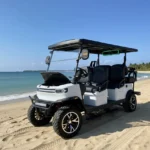
A four-seat cart is often the practical middle ground. It gives homeowners room for family or visiting friends while remaining manageable for regular neighborhood use. For vacation properties, this configuration can also make the property more appealing to guests who want easy transportation within approved areas.
Six-seat models are built for larger families, hotels, resorts, and passenger transport. Before choosing one, consider whether the rear seats will be occupied most of the time. A larger cart is helpful when it earns its space, but it requires more room to store, turn, charge, and transport.
For operations work, passenger seating may be less important than cargo capacity. Utility vehicles and work-oriented carts can carry tools, landscaping materials, luggage, housekeeping supplies, or maintenance equipment. Some operators need a rear cargo bed; others need enclosed storage, multiple seating rows, or a combination of both. Matching the layout to the actual task prevents a common mistake: buying a passenger cart and trying to turn it into a work vehicle later.
Electric carts are a strong fit for many local residential, resort, and golf applications. They run quietly, have no tailpipe emissions during operation, and can be convenient when reliable overnight charging is available. They are especially practical for predictable daily routes with defined distances.
Battery type matters. Lead-acid batteries generally cost less upfront but need more routine attention and have a shorter service life than lithium options. Lithium batteries typically cost more at purchase, yet they can offer lower weight, faster charging, longer life, and more consistent performance. For a cart used occasionally at a second home, either option may work. For a busy resort, rental program, or commercial fleet, lithium can be worth the higher initial investment because downtime affects the operation.
Range claims should be treated as estimates, not promises. Passenger weight, hills, tire pressure, speed, heat, battery age, and accessory use all affect how far a cart travels on a charge. A cart that only covers a short loop each day has different needs than a vehicle making repeated guest transfers or service runs. Build in a realistic margin rather than buying for the best-case range.
Gas-powered vehicles still make sense for certain jobs, particularly where long operating hours, remote locations, or limited charging access are part of the equation. They require fuel and routine engine service, so the trade-off is convenience for extended use versus the quieter, lower-maintenance operation many buyers prefer from electric models.
Do not wait until delivery day to think about charging. Confirm where the cart will be stored, whether the area is dry and secure, and whether the available electrical setup matches the charger requirements. Hotels and commercial properties should also consider how many vehicles may need to charge at the same time.
A dedicated charging area keeps equipment organized and makes daily use easier for staff and guests. It also gives the service team a clear place to inspect batteries, cables, and chargers before small issues become larger ones.
Many buyers ask for a street-legal cart, and the term can mean different things. A low-speed vehicle may be equipped with items such as headlights, turn signals, brake lights, mirrors, seat belts, a windshield, a horn, and a vehicle identification number. Those features can make the vehicle better prepared for road-oriented use, but equipment alone does not guarantee it can be driven on every public road.
Rules can depend on the municipality, neighborhood, road type, speed limits, registration requirements, insurance, and where the cart will actually operate. Conditions may differ between private developments, resort grounds, golf courses, and public streets. Before purchasing, confirm the current requirements that apply to your exact location and intended route.
This is especially important for buyers who split time between Mexico, the United States, Canada, or another destination. A cart configured for one location may need different equipment, paperwork, or operating restrictions in another. Ask these questions before selecting accessories, not after the vehicle arrives.
A basic cart can move passengers, but the right equipment makes it easier to use regularly. In warm coastal conditions, a canopy or roof is more than a cosmetic feature. Quality seating, reliable suspension, proper tires, and adequate lighting also affect how comfortable and confident people feel in the vehicle.
For family use, look closely at seat belts, step height, grab handles, rear-facing seat design, and the cart’s overall stability. For commercial use, think about the driver as well as the passenger. A fleet vehicle that is uncomfortable or difficult to operate can slow down service and encourage rough handling.
Accessories should solve a real need. Enclosures can help with wind and occasional weather. Storage compartments can improve organization. Lift kits and larger tires can be useful on uneven private property, but they may change ride quality, stability, and the way the vehicle fits its intended environment. More equipment is not always better equipment.
The purchase price matters, but ownership support matters just as much. Batteries, tires, brakes, suspension components, chargers, and electrical parts all need attention over time. A dealer relationship should include clear answers about available parts, warranty coverage, service scheduling, and who to call when the cart needs work.
For businesses, this becomes a fleet planning issue. A resort or property manager should consider preventive maintenance, driver training, replacement parts, and backup vehicles before a busy season begins. One disabled cart may be an inconvenience at a residence. Several disabled carts can disrupt housekeeping, guest transportation, grounds work, and daily operations.
Coyne Carts helps buyers compare personal, commercial, and resort-ready options with straightforward guidance on vehicle configuration, delivery, warranty support, and service needs. Inventory depth matters because it gives buyers room to choose the right fit instead of settling for the only unit available.
When reviewing San Jose del Cabo golf carts, compare total suitability rather than just monthly promotions or the lowest sticker price. Ask for the vehicle’s seating capacity, battery type, expected charging needs, warranty terms, available service support, and delivery details. If the cart will be used commercially, ask how it handles the passenger load, cargo weight, and daily mileage your team expects.
It also helps to picture the vehicle at its busiest moment. Will it carry four adults and beach gear? Will staff use it for back-to-back shifts? Does it need to climb grades, cross uneven paths, or fit into a narrow storage area? Those answers usually point to the right category faster than a long feature list.
The best cart is the one that makes daily movement easier without creating a new maintenance or compliance problem. Choose the configuration for the route, the passengers, and the work ahead, then make sure dependable support is available when the vehicle is put to use.