

How to Shop Featured Vehicle Inventory Online
October 23, 2026
Shop featured vehicle inventory online with confidence. Compare seating, power, warranties, delivery, and service support before you choose a vehicle.


A vehicle can look like a golf cart, carry six passengers, and have headlights, turn signals, mirrors, and seat belts – yet its legal use may be very different from the cart parked beside it. That is the point buyers need to understand when comparing LSV versus neighborhood electric vehicles. The terms are often used interchangeably, but the vehicle’s certification, equipment, local rules, and intended use matter far more than the badge on the body.
For homeowners, resorts, golf courses, rental operators, and service fleets, choosing correctly prevents a frustrating surprise after delivery. The right vehicle should fit where you will drive it, who will ride in it, how often it will be used, and what support you need after the sale.
An LSV, or low-speed vehicle, is a federally defined vehicle category in the United States. A compliant LSV is generally designed to travel at speeds above 20 mph but no more than 25 mph, and it must meet specific federal safety equipment requirements. Those requirements typically include headlights, brake lights, turn signals, reflectors, mirrors, a windshield, a vehicle identification number, seat belts, and a parking brake.
A neighborhood electric vehicle, often shortened to NEV, is commonly a consumer and dealer term for a small electric vehicle intended for local transportation. In many U.S. markets, an NEV is effectively an LSV marketed for neighborhood use. In other words, there is often no meaningful mechanical showdown between an LSV and an NEV. The distinction is usually about terminology, registration rules, and the way state or local authorities describe the vehicle.
That said, buyers should not assume every electric cart called an NEV is street legal. Some models are built only for private property, resorts, golf courses, or off-road use. A street-ready appearance does not replace a manufacturer certification label or local approval.
Street legal does not mean a vehicle can be driven on every road. It means the vehicle meets the applicable standards for a designated class and can be registered where local law permits. In the United States, LSVs are generally allowed on roads with posted speed limits of 35 mph or lower, but states, counties, and cities can add restrictions. Some communities allow them on designated routes only. Others require a driver’s license, registration, insurance, and a license plate.
The same careful approach applies in Mexico and tourism-driven coastal markets. Rules can vary by municipality, community, development, and road type. A street-legal buggy suitable for a planned residential community may not be appropriate for a major highway, airport corridor, or high-speed arterial road. Before purchasing, confirm where the vehicle will be driven, whether it can be registered, and whether your community has separate operating rules.
A properly equipped LSV may include the following features:
These details are not extras to sort out later. They determine whether a vehicle is a practical transportation tool or simply a private-property cart.
A standard golf cart is built primarily for golf paths, private land, and controlled environments. It may be ideal for moving around a course, a large estate, or a resort property. It can be less expensive, easier to maintain, and perfectly suited to its purpose.
But a conventional golf cart does not automatically meet LSV requirements. It may lack required safety equipment, the necessary certification, or the speed range that defines an LSV. Adding a few accessories, such as lights or mirrors, does not necessarily make it road legal. Certification and compliance matter.
This distinction is especially relevant for second-home owners in Cabo San Lucas, San Jose del Cabo, La Paz, or Los Barriles. A cart used entirely inside a gated community may need a different setup than a vehicle intended for approved public streets between neighborhoods, shops, beaches, or resort facilities. Buying more vehicle than you need can add unnecessary cost. Buying less can limit where you can legally and safely go.
Start with the routes your vehicle will actually travel. If your use is limited to private roads, a golf course, a hotel campus, a marina, or a large residential property, a standard electric cart or utility vehicle may be the most practical choice. Focus on passenger capacity, battery range, cargo space, roof coverage, suspension, and service access.
If you expect to use approved public roads, begin with an LSV or certified street-legal model. Verify its paperwork before discussing color, upholstery, or accessories. A vehicle that is easy to register and insure can save considerable time compared with trying to modify a non-certified cart after the fact.
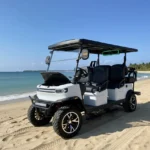
Passenger needs also matter. A two-seat LSV can work well for local errands or property management. A four-seat model suits couples, families, and guest transportation. Six-seat models are often a better fit for resorts, rental fleets, and hospitality operations, where carrying people safely and comfortably is part of the service.
For commercial buyers, daily duty cycle should guide the decision. Housekeeping, maintenance, security, and golf operations may need a utility bed, enclosed storage, higher payload capacity, or a more durable suspension. Guest shuttles may prioritize rear-facing seating, easier entry, weather protection, and a clean presentation. An LSV is not automatically the best fleet vehicle, and a utility cart is not automatically the wrong one. The job determines the right platform.
Battery selection deserves the same attention as street-use classification. Lithium batteries usually offer lighter weight, faster charging, longer cycle life, and more consistent performance. They are often a strong choice for rental fleets, high-use resort vehicles, and buyers who want lower routine battery maintenance.
Lead-acid batteries can still make sense for lighter use and budget-focused applications, but they require more care and may have a shorter service life. Either way, realistic range depends on terrain, passenger load, tire choice, driving habits, temperature, and accessory use. A full six-passenger cart climbing hills with lights and a sound system operating will not travel as far as a lightly loaded vehicle on flat paths.
Plan charging around how the vehicle will be used. A personal cart may charge overnight without issue. A fleet with multiple shifts may need dedicated charging stations, spare units, or an operating plan that keeps vehicles available during peak guest hours.
The fastest way to make a confident choice is to ask direct questions before placing an order. Is this exact model certified as an LSV, and does it have the required VIN and compliance documentation? Can it be registered where I plan to use it? Which roads, communities, or routes will be permitted? What warranty applies to the vehicle, battery, and major electrical components? Who will handle service, parts, and warranty support if the vehicle is located outside the dealership’s immediate area?
Also ask about delivery configuration. Accessories such as doors, enclosures, upgraded seats, lifted suspension, all-terrain tires, cargo beds, and rear-facing seats can change how a vehicle performs. They may also affect comfort, range, handling, or compliance. The best setup is not always the one with the longest accessory list. It is the one that stays dependable in the conditions you face every day.
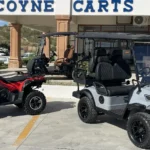
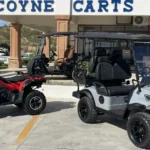
For buyers managing multiple properties or operating across borders, inventory depth and after-sale support are as important as the vehicle itself. Coyne Carts helps customers match street-legal buggies, electric carts, utility vehicles, and fleet solutions to the intended use, with straightforward guidance on available configurations, delivery, warranty, parts, and service support.
The LSV versus neighborhood electric vehicles question is less about choosing a winner and more about confirming the right classification before you buy. If you need approved public-road access, choose a properly certified LSV and verify local requirements. If your driving stays on private property or controlled paths, a conventional electric cart may deliver better value and simpler ownership.
Take the time to match the vehicle to the route, passenger load, terrain, charging plan, and service expectations. That one conversation before purchase can make every trip afterward easier, safer, and more useful.