

How to Shop Featured Vehicle Inventory Online
October 23, 2026
Shop featured vehicle inventory online with confidence. Compare seating, power, warranties, delivery, and service support before you choose a vehicle.


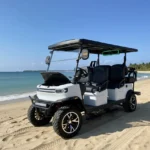
A multi passenger electric shuttle can solve a real transportation problem on a resort, golf course, residential community, marina, or large private property: moving more people without adding the noise, fuel costs, and maintenance demands of a full-size vehicle. The right unit keeps guests comfortable, helps staff stay on schedule, and gives operators a dependable way to cover short routes throughout the day.
The wrong unit, however, can create frustration quickly. A shuttle that is too small leads to extra trips. One with limited range may sit charging during peak hours. A vehicle built only for private-property use can become a liability if the route includes public roads. Before comparing colors, accessories, or price tags, define how the vehicle will work on your property.
A multi-passenger shuttle is not simply a stretched golf cart. It is a people-moving vehicle designed around repeated stops, passenger entry and exit, and predictable routes. Most buyers are looking at four-, six-, or eight-passenger configurations, though larger commercial transport options may be appropriate for high-volume hospitality and event operations.
For a vacation property or neighborhood, a six-passenger electric shuttle may be enough to move family, visitors, and gear between homes, pools, beach access points, or club facilities. For a resort, golf operation, or rental business, the vehicle has to handle a much more demanding routine. It may carry guests, luggage, housekeeping teams, maintenance staff, or event attendees for hours at a time.
That difference matters because passenger capacity is only one part of the decision. The useful question is not, “How many seats does it have?” It is, “How many people and how much weight will it carry on a typical trip, on the steepest part of the route, during the busiest part of the day?”
The best shuttle specification comes from an honest look at the route. Measure the distance of a normal loop, identify grades and rough surfaces, and consider where riders will board. A short flat route on paved resort paths has very different needs than a hilly coastal community with uneven pavement and frequent stops.
Think about traffic patterns as well. If the shuttle will make scheduled loops, passengers may tolerate a larger vehicle with a higher capacity. If it will respond to on-demand calls, faster charging, easy maneuverability, and multiple smaller shuttles may be the better operational choice. One oversized vehicle is not always more efficient than two properly sized units.
A practical route review should account for these five details:
This information prevents a common buying mistake: selecting a vehicle based on advertised range alone. Published range figures are generally based on favorable conditions. Passenger load, hills, heat, tire pressure, driving style, and accessory use can all reduce real-world range.
A shuttle should have enough seats for the job, but crowding every trip is rarely a good service standard. If a six-seat shuttle regularly carries six adults plus bags, confirm the vehicle’s payload rating rather than assuming the seats tell the full story. Payload includes passengers, cargo, accessories, and sometimes added equipment such as enclosure panels or utility racks.
Entry and exit deserve just as much attention. Resorts and residential communities often serve retirees, families with children, and guests carrying personal items. Low step-in height, sturdy handholds, secure seating, and adequate legroom can make a major difference in how the ride feels. Rear-facing seats can increase capacity, but they may not be ideal for every rider or route.
For hospitality use, consider how the seating layout supports the actual task. A guest shuttle may need forward-facing comfort and luggage space. A maintenance transport unit may need a mix of passenger seats and a rear cargo area. A golf course may prioritize durability, turning radius, and easy cleaning over premium seating materials.
Electric power is one of the strongest reasons to choose a shuttle vehicle, but battery type affects ownership experience. Modern lithium battery systems generally provide faster charging, less maintenance, and more consistent performance than traditional lead-acid batteries. They also tend to be lighter, which can help vehicle efficiency. The trade-off is a higher initial purchase price.
Lead-acid batteries can still make sense for lower-use applications or buyers focused on upfront cost, provided the owner is prepared for regular battery care. They require more attention to charging practices, water levels on applicable battery types, cleaning, and replacement planning. For a busy rental fleet or resort operation, the labor and downtime involved may outweigh the initial savings.
Ask for expected range under your intended load, not just an unloaded estimate. Then plan charging around the operation. Overnight charging may be sufficient for a shuttle used for a few short daytime loops. A property running morning-to-evening guest transportation may need opportunity charging, spare vehicles, or a charging area designed for a rotating fleet.
Charging infrastructure should be treated as part of the purchase, not an afterthought. Confirm electrical capacity, outlet requirements, ventilation, weather protection, cable management, and where vehicles will park when charging. A clean, organized charging area protects equipment and makes fleet oversight easier.
This is one of the most important distinctions for buyers in Cabo San Lucas, San Jose del Cabo, and other destination markets. Many electric shuttles are intended for private roads, resort paths, golf courses, campuses, or gated communities. If the shuttle will operate on public streets, the vehicle may need to meet low-speed vehicle requirements and local registration, insurance, lighting, safety, and speed-limit rules.
Street-legal equipment commonly includes headlights, taillights, turn signals, mirrors, windshield wipers where required, seat belts, a horn, and a vehicle identification number. Requirements vary by jurisdiction, and a street-legal vehicle is not permitted on every road. Public-road use often depends on posted speed limits and local regulations.
Do not buy based on an assumption that a cart can be made legal later with a few accessories. Confirm the intended use before selecting the model. That protects your investment and helps avoid downtime, compliance issues, or an unsuitable vehicle arriving on site.
Commercial transportation is built on consistency. Look for seat belts where appropriate, reliable braking, automotive-style lighting, mirrors, speed control, and a stable suspension suited to the terrain. If your operation runs after sunset or before daylight, visibility equipment is a necessity, not an upgrade.
Weather protection also deserves consideration. A roof is standard on many models, but side enclosures, windshields, and durable seating materials can significantly improve passenger comfort in sun, wind, or rain. In coastal environments, corrosion resistance and regular cleaning are especially valuable. Salt air, sand, and heavy seasonal use are hard on any vehicle if service is ignored.
For fleet buyers, it can be worthwhile to standardize accessories across every shuttle. Matching enclosures, charging equipment, keys, tires, and replacement parts simplify training and reduce service confusion.
The lowest advertised price is not always the lowest operating cost. Compare the full package: vehicle configuration, battery system, charger, delivery, warranty coverage, parts availability, scheduled maintenance, and local service support. A low-cost shuttle that waits weeks for a critical part can cost a hospitality business far more than it saved upfront.
Ask direct questions before committing. What does the warranty cover? Who performs warranty work? Are common parts in stock? Can the dealership support multiple units as the fleet grows? What paperwork is required for delivery or street-legal registration? Clear answers are a sign that the seller understands commercial transportation, not just recreational vehicles.
Coyne Carts works with buyers who need personal and commercial electric vehicles without the usual runaround, from selecting the right seating configuration to arranging delivery and support after the sale. For businesses, that dealership relationship matters long after the first vehicle arrives.
A well-chosen shuttle becomes part of the guest experience and the daily workflow. Build the decision around your route, passenger load, charging plan, and support needs, then choose the vehicle that can perform reliably when your property is at its busiest.