

New Golf Carts Cabo San Lucas | From $10,495
October 24, 2026
Shop new golf carts in Cabo San Lucas from $10,495 at Coyne Carts. Enjoy an 8-year battery warranty, 2-year bumper-to-bumper coverage, and local service support.


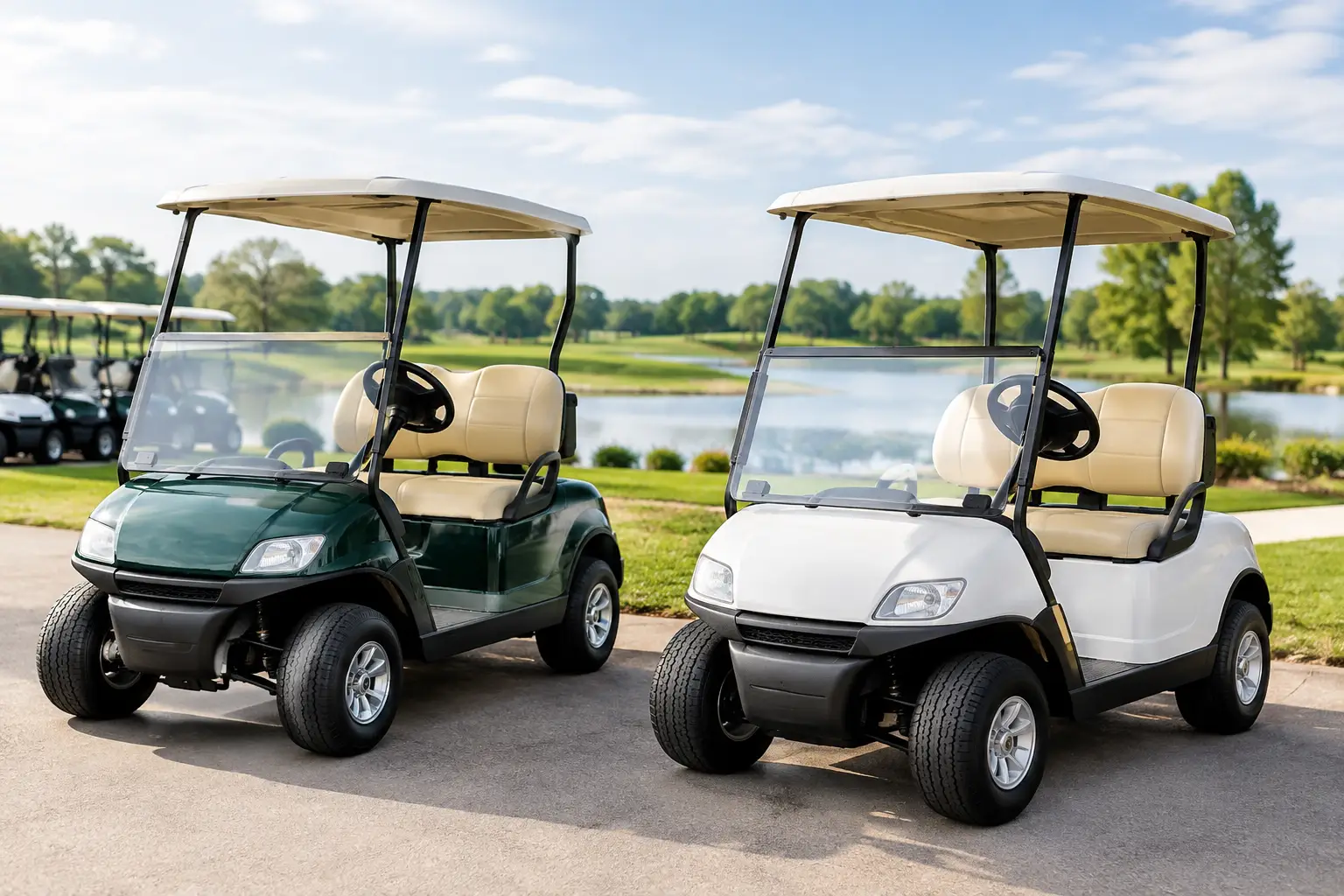
A golf cart purchase can be simple or expensive, depending on what happens before you sign the paperwork. Buyers comparing carritos de golf nuevos y usados are usually looking for the same thing: dependable transportation that fits their property, passengers, budget, and local driving needs. The right choice is not always the lowest-priced cart. It is the vehicle that is ready for the work and miles you expect from it.
For a home in a gated community, a resort shuttle route, a golf course, or a beach-area rental operation, start with how the cart will actually be used. That determines whether a new model, a carefully inspected used cart, or a commercial fleet solution makes the most financial sense.
A new golf cart is often the best fit when reliability, warranty coverage, and a specific configuration matter most. You can choose the seating capacity, battery system, color, accessories, and street-legal equipment before the vehicle enters service. For resorts, property managers, and rental businesses, that consistency can make fleet operations easier. Drivers receive the same controls, charging procedures, and passenger layout across multiple units.
A used golf cart can be a smart purchase when the vehicle has been inspected, maintained, and priced honestly. It can reduce the upfront investment for a homeowner, seasonal resident, or business adding capacity quickly. The trade-off is that condition varies widely. Two carts with the same model year can have very different value depending on battery age, charging history, hours of use, corrosion, tire condition, and prior repairs.
The decision comes down to ownership priorities. Choose new when you need predictable service life and full warranty protection. Choose used when upfront savings are the priority and you have clear documentation of the cart’s condition and available support after the sale.
A used cart should never be judged by paint and upholstery alone. A clean body is appealing, but the drivetrain, batteries, frame, and charging system determine whether it is a good purchase.
For electric carts, batteries are one of the largest ownership costs. Ask when they were installed, what type they are, how the cart has been charged, and whether the charger is included and functioning properly. Battery terminals should be clean and secure, with no heavy corrosion. A cart that loses power quickly, charges inconsistently, or struggles uphill may need more than a simple adjustment.
Lithium batteries generally offer lighter weight, longer cycle life, and faster charging than traditional lead-acid batteries. They also cost more initially. Lead-acid systems can still be practical for moderate use, provided they have been maintained correctly and the buyer understands the replacement timeline.
Coastal areas can be hard on vehicles. Salt air, sand, humidity, and uneven roads may accelerate corrosion and wear. Inspect the frame, suspension components, brake hardware, and undercarriage. During a test drive, the steering should feel controlled, brakes should engage evenly, and the cart should not pull sharply to one side.
Listen for rattles, grinding, or clunking over bumps. These do not automatically rule out a cart, but they should be explained and reflected in the price. A dealer that is straightforward about repairs and reconditioning helps you evaluate the real cost of ownership.
Confirm that the cart truly fits the number of people it will carry. A two-seat cart may work for a couple, but a four-seat or six-seat model is more practical for families, guests, resort transport, and rental operations. Rear-facing seats are useful for passengers, but forward-facing seating can be more comfortable for longer trips.
Check seat bases, seat belts where applicable, roof supports, lights, mirrors, tires, and windshield condition. If the vehicle will operate outside a private course or community, ask what equipment is required for local road use. Street-legal requirements vary by location and should be confirmed before purchase.
New carts cost more at the beginning, but they give buyers a clear starting point. You know the vehicle’s history because it has none. You can select an electric or gas-powered model based on range, terrain, refueling or charging access, and expected daily use.
Electric carts are quiet, simple to operate, and well suited for neighborhoods, resorts, golf facilities, and short local trips where charging is convenient. Gas carts can be useful for longer operating days, remote properties, hilly terrain, and applications where quick refueling matters more than quiet operation.
A new unit also makes customization easier. Common upgrades include lifted suspensions, larger tires, storage, rear cargo beds, upgraded seats, extended roofs, lighting packages, windshields, and street-use equipment. For a business, factory-fresh carts can also support a more polished guest experience and reduce the risk of downtime during a busy season.
Warranty coverage matters, but buyers should understand what it includes. Ask about coverage for the vehicle, batteries, charger, parts, labor, and transportation if service is needed. Warranty terms are most valuable when the dealer can also provide responsive parts and service support after delivery.
The cheapest cart is not always the least expensive one to own. A lower-priced used cart with aging batteries, worn tires, and no service history may require immediate investment. A newer cart with a higher purchase price could have lower repair costs, better efficiency, and stronger resale value over the next several years.
Before comparing offers, include delivery, registration or street-use equipment if needed, batteries, charger, accessories, maintenance, and expected repairs. Commercial buyers should also calculate downtime. A cart that is unavailable during check-in, guest transport, maintenance rounds, or a rental reservation can cost more than the repair invoice.
For larger operations, standardizing a fleet can simplify parts inventory, staff training, charging routines, and appearance. A mixed fleet may work when budgets are tight, but it can create more maintenance variables over time.
The right cart should match passenger count and cargo needs without being larger than necessary. Two-seat models are efficient for personal use, golf, or property checks. Four-seat models are popular for homeowners, vacation properties, and families. Six-seat carts are often a better fit for resorts, tour operators, and businesses moving guests around a larger property.
Utility vehicles deserve separate consideration. If your team carries tools, landscaping materials, laundry, luggage, maintenance supplies, or food-service equipment, a cargo bed and higher payload capacity may be more valuable than extra passenger seating. Using a passenger cart for heavy commercial work can shorten its service life.
In Cabo San Lucas, San Jose del Cabo, La Paz, Loreto, Los Barriles, and other coastal destinations, the route matters as much as the vehicle. Consider hills, sand, road surfaces, travel distance, charging availability, and whether the cart will be stored indoors or exposed to the elements.
A trustworthy purchase conversation should be direct. Ask whether the listed price includes the charger, batteries, delivery options, and any installed accessories. For used carts, request details about inspection, reconditioning, battery age, and known repairs. For new carts, confirm build time, availability, warranty terms, and the process for future service.
It is also worth asking how quickly parts can be sourced and who will handle warranty administration. A vehicle is only as useful as the support behind it. Dealers with broad inventory and cross-border experience, such as Coyne Carts, can be especially helpful when buyers need a specific configuration or want a practical delivery plan for Baja, Mexico, the United States, Canada, or resort markets in the Caribbean.
A good golf cart should make movement easier, not create another maintenance project. Buy the cart that fits your daily route, passenger load, and support expectations, then keep its service records from day one. That approach protects both your investment and the people who depend on it.