

How to Shop Featured Vehicle Inventory Online
October 23, 2026
Shop featured vehicle inventory online with confidence. Compare seating, power, warranties, delivery, and service support before you choose a vehicle.



A golf cart in Los Cabos can be much more than a way to get from the parking lot to the first tee. For homeowners, it may become the easiest way to move around a community. For resorts and property teams, it can keep guests, luggage, housekeeping, and maintenance moving without adding a full-size vehicle to every task. That is why Cabo San Lucas golf cart sales should start with how and where the vehicle will work, not just with its color or seat count.
The right cart should fit your daily route, passenger load, terrain, local operating requirements, and service expectations. A lower upfront price can lose its appeal quickly if the vehicle is underpowered, poorly supported, or not equipped for the way you intend to use it. Buying with the right information up front makes ownership simpler after delivery.
Before comparing models, be specific about the vehicle’s primary job. A two-seat cart used for golf or short trips within a private community has very different needs from a six-passenger street-legal buggy used to transport family and guests. A resort shuttle, meanwhile, needs dependable passenger capacity, easy entry and exit, and a service plan that keeps downtime low.
Distance matters as much as seating. Ask how far the cart will travel on a normal day, whether it will carry people, cargo, or both, and whether there are grades along the route. Cabo-area communities can include flat paved roads, uneven paths, steep driveways, and loose surfaces. A cart that performs well on level pavement may not be the best choice for frequent hills or heavier loads.
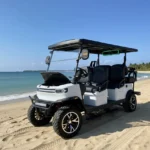
Passenger golf carts are usually the right starting point for neighborhood transportation, golf use, and resort guest movement. Two-seat and four-seat models are practical for couples, homeowners, and small groups. Six-seat carts give larger families and hospitality businesses more flexibility, particularly when the rear-facing seat is used regularly.
Utility vehicles are built around work. They can carry tools, supplies, landscaping materials, housekeeping equipment, or maintenance crews more effectively than a passenger cart. If your team will routinely haul cargo, choose a purpose-built utility bed and confirm the payload rating instead of trying to adapt a passenger vehicle for a job it was not designed to handle.
Street-legal low-speed vehicles are a separate category. They generally include road-use equipment such as lighting, mirrors, seat belts, a horn, windshield, and other required features. The exact requirements and permitted roads depend on local rules and the community where the vehicle will operate. A dealer should help you understand the equipment package and paperwork needed for your intended use, but buyers should also verify the rules that apply to their route before committing.
Once you know the job, compare vehicles based on the details that affect daily ownership. Price is part of the decision, but it is not the whole decision. A transparent quote should make clear what is included, what is optional, and what support is available after the sale.
Battery type deserves close attention. Traditional lead-acid batteries can be a sensible, proven option for certain applications, but they require routine maintenance and proper charging habits. Lithium battery systems typically offer lighter weight, longer usable life, faster charging, and less routine maintenance. They also tend to cost more initially. The better choice depends on your usage frequency, expected ownership period, and willingness to manage battery maintenance.
Power and range should be matched to real conditions. Manufacturers may publish range estimates, but those figures can change with passenger weight, hills, tire choice, heat, cargo, driving style, and battery condition. If your route includes long distances, elevation changes, or repeated trips throughout the day, ask for a realistic recommendation based on that use rather than relying on an ideal range number.
Comfort equipment is worth considering early. Quality seats, rear armrests, a roof extension, upgraded suspension, windshields, storage, and weather protection can make a meaningful difference for a cart used every day. For a resort or rental operation, durable upholstery and easy-to-clean surfaces can be more valuable than purely cosmetic upgrades.
New carts offer the clearest starting point for buyers who want current equipment, fresh batteries, warranty coverage, and predictable service history. They are often the better fit for commercial fleets, high-use personal vehicles, and buyers who want to customize seating, color, wheels, accessories, or street-legal equipment before delivery.
Used carts can offer value when the condition is properly evaluated and the seller can explain the vehicle’s history. The important question is not simply the model year. Check the battery age and condition, charging system, tire wear, brakes, steering, suspension, body condition, and signs of corrosion or neglected maintenance. In coastal environments, proper care matters because salt air and moisture can accelerate wear on electrical connections and metal components.
A used cart can be a smart purchase, but only when the buyer understands what has been inspected, repaired, and covered. If the difference in price between a used vehicle and a new, warrantied model is small, the new option may offer better long-term confidence.
Many buyers assume any golf cart can be driven on public roads. That assumption can create problems. A cart intended only for private property or golf-course use may not have the safety equipment, registration path, or speed capability needed for street operation.
If road access is part of your plan, bring it up at the beginning of the conversation. Explain where you will drive, whether the cart will cross public streets, and whether it will be used inside a gated community, resort, or municipality. This helps the dealer recommend a properly equipped low-speed vehicle rather than an unsuitable cart with add-ons that do not solve the legal or practical issues.
For second-home owners and international buyers, delivery and documentation are also part of the purchase. Ask how the vehicle will be delivered, what paperwork is provided, and who will be available if you need support after you return home. A dealership with cross-border experience can reduce unnecessary delays and confusion.
A cart is a vehicle, not a disposable purchase. It needs inspections, charging guidance, tire service, brake work, battery care, and occasional replacement parts. That makes dealer support a major part of the value equation.
Before buying, ask who handles warranty claims, whether common parts are available, and where service can be performed. This is especially relevant for commercial buyers. A resort cannot afford to park guest transportation for weeks while waiting for basic parts or an answer about coverage.
Coyne Carts supports customers with a broad inventory and access to sales, parts, service, warranty administration, and fleet solutions. That one-dealer relationship can be useful when you need a personal cart today and additional vehicles, accessories, or maintenance support later.
Fleet purchases need a more operational approach than a single personal cart. Start by mapping routes, peak passenger demand, charging locations, duty cycles, and staff responsibilities. A fleet that is too small creates delays. A fleet with the wrong vehicle mix can leave expensive assets sitting unused.
For example, guest transportation may call for multiple six-seat passenger vehicles, while housekeeping and maintenance need smaller utility units with cargo capacity. Golf courses may need a mix of player carts, beverage units, and maintenance vehicles. Standardizing brands, battery systems, and common wear parts can simplify training and maintenance over time.
Commercial buyers should also consider the replacement plan before placing the first order. Ask how quickly additional units can be sourced, whether vehicles can be configured consistently, and what service support looks like during busy seasons. Large inventory access matters when a business cannot wait months to expand or replace a vehicle.
A good dealer should welcome practical questions. Ask for the out-the-door price, the vehicle’s battery type and age, expected range under your conditions, included accessories, warranty terms, available service, and delivery timing. If you are considering street use, ask exactly what equipment and paperwork apply to your situation.
Also ask what happens after the sale. Who do you call for a service issue? How are warranty concerns handled? Are replacement parts available? Clear answers are a sign that the dealer is focused on the ownership experience, not only the transaction.
The best cart is the one that fits your route, your passengers, and your expectations long after the first drive. Choose a vehicle with the right capability, honest pricing, and support behind it, and it will be ready for the everyday work and enjoyment that brought you to it in the first place.