

How to Shop Featured Vehicle Inventory Online
October 23, 2026
Shop featured vehicle inventory online with confidence. Compare seating, power, warranties, delivery, and service support before you choose a vehicle.


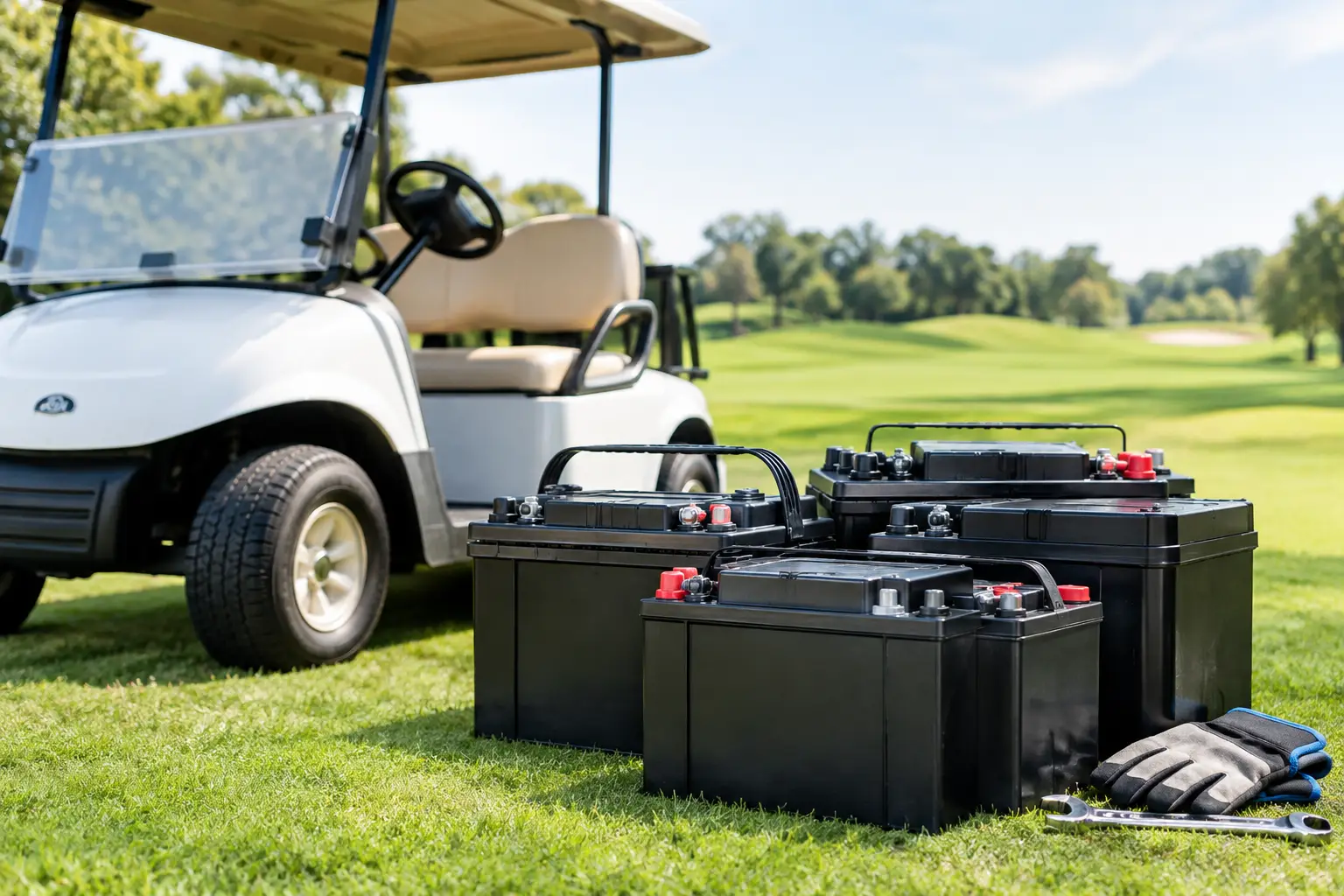
At Coyne Carts And Powersports Cabo San Lucas we offer 36V and 48V Lithium Battery upgrades from $1,599.00 US INSTALLED!!! CALL AND SCHEDULE TODAY AT 480-201-2983 US
A cart that slows down on hills, loses range halfway through the day, or needs frequent charging is often telling you the same thing: its battery system is no longer meeting the job. Cart batteries are not a minor replacement part. They determine how far your vehicle travels, how it performs with passengers or cargo, and how much attention it needs between trips.
For homeowners, golfers, resort operators, and service fleets, the right choice comes down to more than price. Battery type, voltage, charging habits, terrain, climate, and daily workload all matter. A battery setup that works well for a lightly used neighborhood cart may not be the right fit for a six-passenger resort shuttle or utility vehicle running all day.
Before comparing battery types, confirm what your vehicle was built to use. Most electric carts operate on a 36-volt, 48-volt, or 72-volt system. That total voltage is created by connecting multiple batteries in a specific arrangement. Replacing batteries with the wrong voltage, size, or terminal layout can reduce performance, create charging problems, or damage electrical components.
Check the battery compartment, owner documentation, and existing battery labels. You need to know the system voltage, number of batteries, physical tray dimensions, cable arrangement, and charger compatibility. If the cart has been modified with a lift kit, larger tires, added lights, sound systems, or extra seating, it may also need more capacity than the original setup provided.
Battery capacity is commonly measured in amp-hours. Higher capacity generally means more available runtime, but it also affects weight, price, and charging needs. A cart used for short trips around a community does not need the same reserve as a commercial vehicle moving guests, luggage, tools, or maintenance equipment.
Most buyers choose between traditional lead-acid batteries and lithium batteries. Neither is automatically right for every cart. The better choice depends on how often the vehicle is used, who will maintain it, and how long you plan to keep it.
Flooded lead-acid batteries remain common in golf carts because they are widely available and usually cost less at the time of purchase. When maintained correctly, they can provide dependable service for personal carts and lower-use vehicles.
Their trade-off is maintenance. Flooded batteries need regular watering with distilled water, terminal inspection, and careful charging. They are also heavy, and their voltage drops more noticeably as the charge level falls. In practical terms, a cart may feel less responsive near the end of a long day.
Sealed AGM lead-acid batteries reduce watering requirements, but they still carry the weight and shorter cycle-life limitations associated with lead-acid technology. They can make sense for owners who want a familiar system with less upkeep, provided the charger and battery specifications match.
Lithium batteries cost more upfront, but they offer real operating advantages. They are significantly lighter, charge faster in many applications, maintain more consistent power during use, and typically provide a longer service life than lead-acid options. Most lithium systems also include a battery management system that helps protect against overcharging, excessive discharge, and temperature-related issues.
For a resort, rental operation, golf course, or commercial fleet, lithium can reduce downtime and maintenance labor. A lighter battery pack can also improve acceleration and reduce stress on the cart. For homeowners who use a cart frequently, the convenience of no watering and more consistent range can justify the higher purchase price.
The important caution is compatibility. A lithium conversion may require a compatible charger, proper wiring, and confirmation that the battery management system can support the cart’s controller and accessories. A quality installation is worth it. Saving money on an improperly matched battery can create problems that cost more later.
Range estimates can be misleading because they are based on ideal conditions. A cart carrying two adults on flat pavement uses far less energy than a six-seat cart climbing grades with passengers, coolers, or maintenance supplies.
Think about the longest normal day, not the average quick ride. Consider whether the cart will travel through a resort property, a hilly neighborhood, a golf course, sandy paths, or paved streets. Heat, stop-and-go driving, tire pressure, payload, and accessory use all affect battery draw.
A personal cart that covers a few miles at a time can often use a standard battery configuration. A rental fleet or hospitality vehicle needs a larger margin. It is better to have usable capacity left at the end of a shift than to push batteries deep into discharge every day. Regularly draining any battery system to empty shortens its working life.
Good charging habits are one of the simplest ways to get more life from cart batteries. Use the charger designed for your battery chemistry and voltage. A charger for flooded lead-acid batteries is not automatically suitable for lithium, and an incorrect charging profile can reduce performance or trigger battery protection systems.
For lead-acid batteries, recharge after use rather than leaving the cart partially discharged for days. Keep the charger connected until its cycle is complete, and avoid interrupting charging repeatedly. Batteries should be charged in a ventilated area because lead-acid systems can release gases during charging.
Lithium batteries are more forgiving in daily use, but they still benefit from correct equipment and storage practices. If the cart will sit for an extended period, follow the battery manufacturer’s recommended storage charge level. Do not assume every lithium pack should be left on a charger continuously.
In Cabo San Lucas and other coastal areas, heat and humidity deserve extra attention. Park in shade when possible, keep battery compartments clean and dry, and inspect connections for corrosion. Salt air can accelerate corrosion on terminals and cables, especially for carts used near the beach or marina.
Battery trouble often appears gradually. Reduced range is the most common sign, but it is not the only one. Slow acceleration, dimming lights, a charger that runs unusually long, swollen cases, leaking fluid, and hot cables all deserve prompt attention.
For flooded lead-acid batteries, inspect water levels regularly. Plates should remain covered, but do not overfill before charging. Add distilled water only, not tap water. Clean corrosion with the appropriate battery-safe method, make sure connections are secure, and keep metal tools away from battery terminals.
Replace lead-acid batteries as a full matched set whenever possible. Mixing new and old batteries creates imbalance, because the weaker battery limits the entire system. The same principle applies to mixing different capacities, brands, or ages. A cart is only as dependable as its weakest battery.
A battery test can show whether the issue is truly the batteries or another component, such as the charger, controller, solenoid, cables, or motor. That diagnosis matters. Replacing a battery pack will not fix a charger that is failing to deliver a proper charge.
Still, replacement is usually the practical answer when batteries no longer hold adequate charge, show physical damage, require frequent watering, or leave the cart unable to finish its normal route. If you are replacing a pack that is several years old, compare the total ownership cost rather than only the initial invoice. A lower-priced lead-acid pack may be right for occasional use, while lithium may offer better value for a vehicle that earns its keep every day.
For fleet buyers, standardizing battery systems across similar vehicles can simplify training, charging, spare parts, and maintenance planning. It also makes it easier to track performance and replace equipment before an unexpected failure affects guests or operations.
It depends on battery chemistry, use, charging habits, climate, and maintenance. Lead-acid batteries commonly last several years with proper care, while a quality lithium system can last considerably longer. Heavy loads, deep discharges, and poor charging habits shorten either lifespan.
You can in an emergency, but it is rarely the best long-term solution for a series-connected lead-acid pack. A new battery paired with older batteries will not perform like a matched set, and the old batteries can limit its life.
Often, yes. Larger tires, lift kits, steep terrain, and added weight make the motor work harder. If your cart has been upgraded for off-road use or extra passengers, review battery capacity before assuming the original pack is enough.
The best battery purchase is the one that fits the vehicle, the workload, and the level of maintenance you are prepared to provide. Coyne Carts can help buyers match the right system to personal carts, resort vehicles, and commercial fleets, so the vehicle is ready to work when you need it.