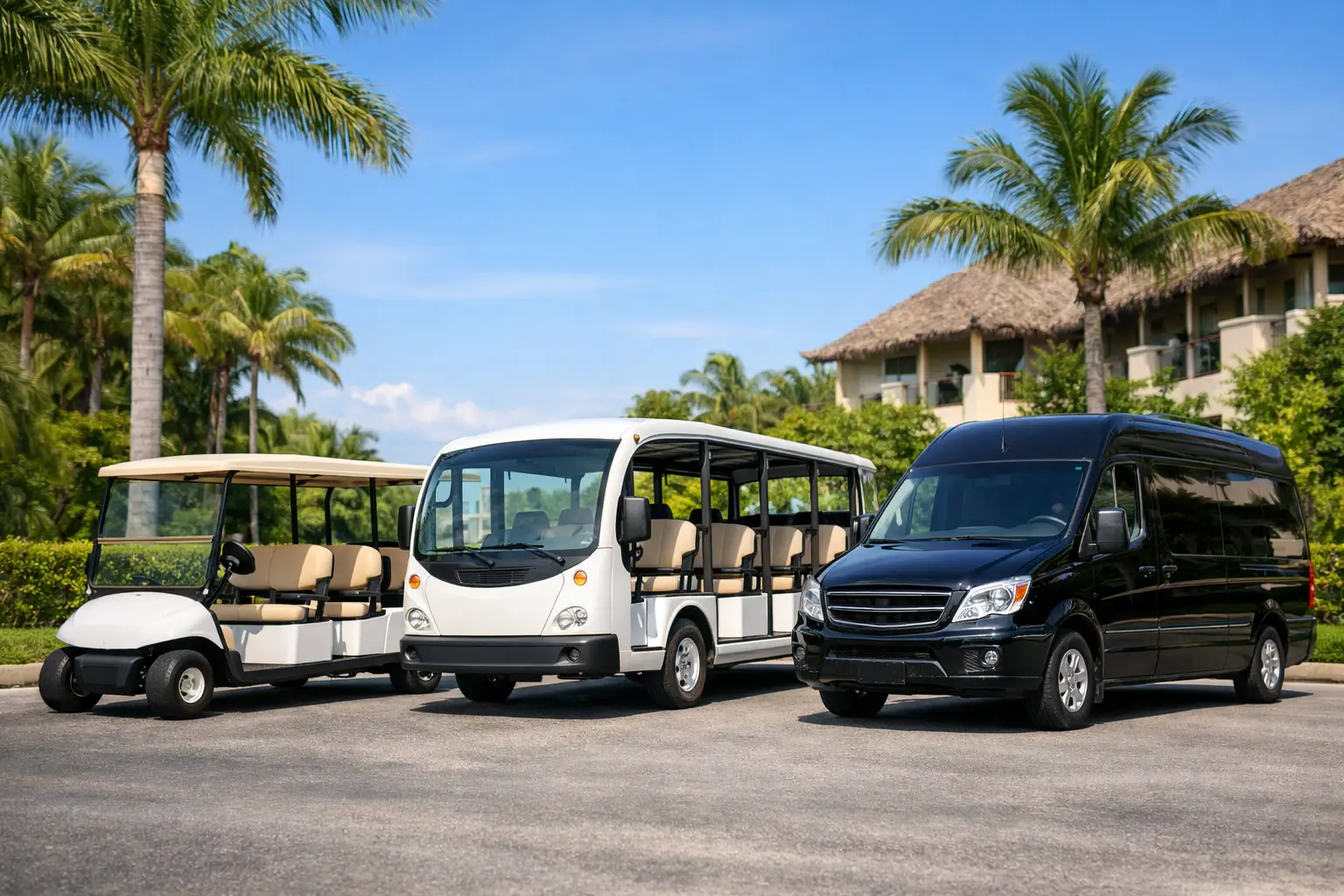
Guests notice transportation before they ever comment on the room. If the shuttle is slow, the cart looks tired, or staff keep borrowing the wrong vehicle for the wrong job, the whole property feels less organized. That is why resort transportation vehicles matter more than many operators expect. They shape first impressions, daily operations, and the cost of keeping a property moving.
For resorts, hotels, golf communities, and large hospitality properties, the right vehicle mix is not just about getting people from point A to point B. It is about protecting the guest experience while making staff more efficient. A property that chooses well can reduce downtime, simplify maintenance, and avoid buying vehicles that sit unused for most of the year.
What resort transportation vehicles need to do well
A resort fleet usually has to serve more than one purpose. Guest transportation is the obvious one, but that is only part of the picture. Many properties also need utility support for housekeeping, maintenance, landscaping, security, food service, and luggage handling.
That creates a practical challenge. A comfortable multi-passenger shuttle may be perfect for check-in arrivals but useless for moving tools or linens. A utility vehicle may help the operations team cover ground quickly but does nothing for the guest arrival experience. Most resorts need a mix of people movers and work vehicles, not a one-size-fits-all fleet.
The best buying decisions usually start with route planning. Think about how far vehicles travel, how often they stop, whether paths are paved, and how many passengers need transport during peak hours. A beachfront property with short internal trips has very different needs than a large hillside resort with separate villas, restaurants, and event spaces.
Matching resort transportation vehicles to daily operations
Passenger count is usually the first spec buyers look at, and that makes sense. Two-seat and four-seat carts can work well for managers, security teams, and concierge staff. Six-seat and larger vehicles are more useful when guest movement is constant and predictable, especially between rooms, pools, clubhouses, and parking areas.
But seating capacity alone is not enough. You also need to consider turnover speed. A vehicle that carries more people in one trip may still slow operations if boarding is awkward or if routes require too many stops. In some properties, a greater number of smaller vehicles works better than a few large units. In others, the opposite is true.
Utility vehicles should be selected with the same care. Maintenance teams often need bed space, towing capability, and all-day reliability more than they need speed. Housekeeping may need compact vehicles that can move through guest areas quietly without feeling intrusive. Security teams often benefit from street-legal or low-speed vehicles if they move between internal roads and surrounding access points.
This is where many fleet purchases go off track. Operators buy based on a category name instead of the actual job. A resort does not need a generic fleet. It needs vehicles assigned to real tasks with clear daily use.
Electric or gas depends on the property
Electric resort transportation vehicles are a strong fit for many hospitality settings because they are quieter, cleaner around guests, and often less expensive to operate over time. They are especially attractive for resorts that want a polished appearance and low noise near villas, spas, and dining areas.
That said, electric is not automatically the right answer for every vehicle in every fleet. Battery range, charging time, route length, terrain, and local infrastructure all matter. If a property runs long shifts with limited downtime between uses, charging logistics need to be planned from the start. A beautiful electric fleet becomes a headache if staff are rotating vehicles around dead batteries by mid-afternoon.
Gas vehicles can still make sense for certain utility roles, tougher terrain, or properties where charging stations are limited. The trade-off is usually more noise, more fuel management, and a different maintenance profile. For some operators, the smartest decision is a mixed fleet that gives guest-facing routes the quiet benefits of electric while keeping gas or heavy-duty utility units for more demanding back-of-house work.
Guest experience should guide the final decision
Transportation is a service touchpoint, not just a mechanical function. Guests notice ride quality, ease of entry, shade coverage, cleanliness, and how professional a vehicle looks when it arrives.
If your property caters to families, older guests, or owners with mobility concerns, step height and seating comfort deserve more attention than buyers often give them. A cart that looks good in a brochure can still create frustration if guests struggle to get in and out. In hot coastal markets, canopy design and airflow matter just as much as appearance.
Luggage handling is another detail that gets overlooked. Airport-style arrivals, wedding groups, and long-stay guests tend to carry more than expected. If your front-of-house team constantly stacks bags awkwardly or sends a second vehicle just for luggage, you may have the wrong setup. Sometimes one purpose-built baggage vehicle can improve service more than adding another passenger cart.
Reliability beats flashy features
Resorts do not have time for vehicles that spend too many days in service bays. A dependable fleet keeps operations smooth and protects staff morale. When one cart is down, another team often ends up borrowing a vehicle, and that starts a chain reaction across the property.
That is why support after the sale matters as much as the vehicle itself. Buyers should ask direct questions about parts availability, warranty coverage, service response, and how quickly replacement units or repairs can be handled. A lower upfront price can become expensive fast if parts are hard to get or warranty terms are vague.
For commercial buyers, broad inventory access can also make a difference. If you need matching units, specialized configurations, or faster replacements during expansion, a dealer with real fleet depth is easier to work with than one that only handles a few units at a time. In resort operations, consistency is valuable. Matching vehicles simplify training, maintenance, and the overall look of the property.
Street-legal and low-speed options can expand flexibility
Some resorts and hospitality communities need vehicles that can legally travel beyond private paths. Street-legal buggies and low-speed vehicles can be useful for mixed-use properties, staff transit between nearby facilities, or developments where internal roads connect to public access points.
This is not just a compliance issue. It is also a planning issue. If a property may expand, add nearby amenities, or integrate residential and hospitality areas, buying vehicles with broader use capability can prevent a second purchase later. Of course, that only helps if local regulations support the intended use, so buyers should confirm the operating environment before committing.
Buying for seasonality and growth
A year-round luxury property and a seasonal tourism business should not build fleets the same way. Resorts with heavy peak periods need to think about surge capacity. That may mean buying enough vehicles to cover high occupancy or combining owned units with rental support when demand spikes.
There is no perfect answer for every operation. Owning more vehicles gives you control and availability, but idle inventory ties up capital. Leaning too heavily on temporary solutions may create inconsistency during the busiest months. The right balance depends on occupancy patterns, labor structure, and how often special events stretch normal transportation needs.
If your property is growing, fleet planning should look at the next two to three years, not just the next quarter. Expansion often exposes weak vehicle choices quickly. It is much easier to standardize early than to manage a patchwork fleet later.
What commercial buyers should ask before they commit
Before purchasing resort transportation vehicles, buyers should be clear about a few practical issues. What is the real daily use case for each unit? How many hours will it run? Who will maintain it? Where will it charge or refuel? What happens when a vehicle is down during peak occupancy?
The strongest fleet decisions usually come from honest answers, not optimistic guesses. If a route is steep, say so. If staff tend to overload utility beds, account for it. If guests expect a premium look, do not settle for purely functional units in front-of-house roles.
For resorts in markets like Cabo San Lucas and San Jose del Cabo, durability matters even more because heat, salt air, and constant guest turnover can punish equipment fast. Vehicles should be chosen with those real operating conditions in mind, not just showroom appeal.
A dealership that understands hospitality fleets can help sort through these trade-offs without overcomplicating the process. Coyne Carts works with both personal and commercial buyers who need practical answers, quick access to inventory, and support after delivery, which is exactly what resort operators should expect from a fleet partner.
The right fleet does not call attention to itself. Guests move comfortably, staff work faster, and the property feels well run from the moment people arrive.