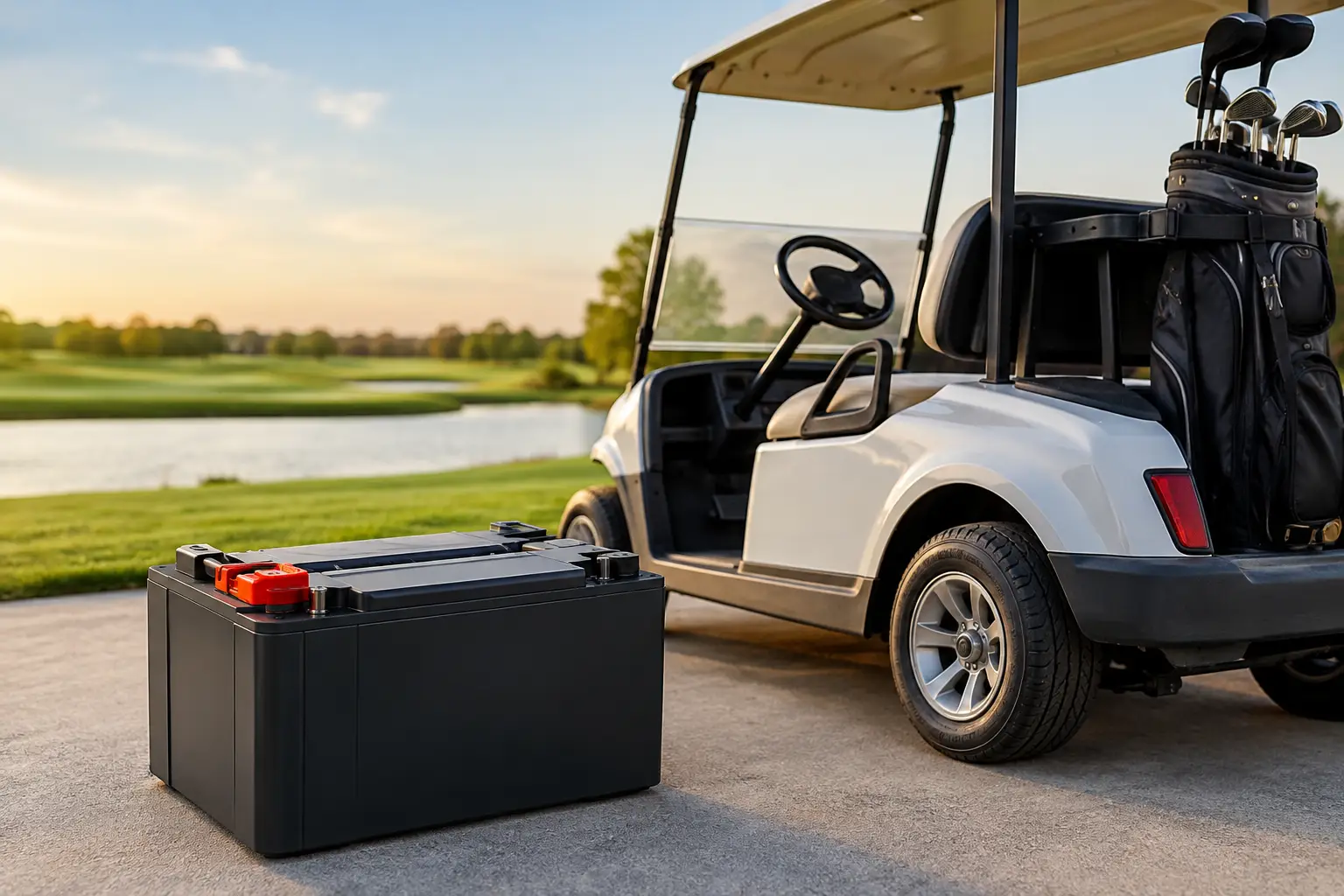
A golf cart battery should make ownership easier, not create another maintenance concern. So, are lithium batteries safer? In many properly designed golf cart applications, yes – especially compared with older battery systems that require regular watering, produce corrosive residue, and can release hydrogen gas while charging. But lithium safety is not automatic. It depends on the battery chemistry, the built-in protections, the charger, the installation, and how the cart is used.
For homeowners, resorts, golf courses, and rental fleets, the right question is not simply whether lithium is safe. It is whether the battery system is engineered and installed correctly for the vehicle and operating conditions.
Are Lithium Batteries Safer Than Lead-Acid Batteries?
A quality lithium battery can reduce several common safety and maintenance issues associated with flooded lead-acid batteries. Traditional lead-acid batteries contain liquid electrolyte, need periodic watering, and can spill acid if damaged or tipped. During charging, they may also release hydrogen gas. In a poorly ventilated area, that gas can create a real hazard.
Lithium batteries are sealed. There is no battery watering, no acid cleanup, and no routine risk of hydrogen gas buildup during normal charging. They are also lighter, which can make a golf cart easier on tires, suspension components, and braking systems when the battery conversion is properly planned.
That said, lithium batteries store a large amount of energy in a compact package. A damaged, poorly built, incorrectly charged, or improperly installed battery can overheat or fail. Lithium is not a product category where the lowest-priced option is automatically the best value.
The Battery Chemistry Matters
Not all lithium batteries behave the same way. For golf carts and low-speed vehicles, lithium iron phosphate, commonly called LiFePO4 or LFP, is generally the chemistry buyers should ask about. It is known for better thermal stability than certain other lithium-ion chemistries used in consumer electronics and high-performance applications.
This does not mean an LFP battery cannot be damaged or become unsafe. Any battery can be affected by physical impact, incorrect wiring, water intrusion, extreme heat, or a charging fault. The difference is that a well-built LFP battery has a more stable chemistry and is widely used in applications where long cycle life and dependable operation matter.
When comparing carts, conversions, or replacement batteries, ask the dealer or supplier what chemistry is inside the pack. “Lithium” alone does not tell you enough.
The BMS Is the Safety System You Cannot See
The battery management system, or BMS, is one of the most important parts of a lithium setup. Think of it as the battery’s onboard protection and traffic controller. It monitors cell voltage, temperature, current, and charging conditions, then disconnects or limits the battery when readings move outside safe operating limits.
A capable BMS can help protect against overcharging, over-discharging, excessive current draw, short circuits, and charging or discharging at unsafe temperatures. For golf carts, this matters because real-world use is rarely gentle. Carts climb grades, carry passengers, pull utility loads, sit parked for periods, and may operate in high coastal heat.
The BMS should be matched to the cart’s voltage and expected amp draw. A battery that is undersized for a six-passenger cart, a utility bed, or frequent hill climbing may repeatedly hit its protection limits. That can leave the cart without power at an inconvenient time, even if the battery itself is not defective.
Charging Is Where Most Avoidable Problems Start
Using the correct charger is essential. A charger designed for lead-acid batteries may follow a charging profile that is not appropriate for lithium. Even when a cart appears to charge, the wrong charger can shorten battery life or interfere with the battery management system.
A lithium-compatible charger should match the battery voltage, chemistry, and recommended charging parameters. The charging port, cables, connectors, and onboard wiring also need to be in good condition. Loose connections create resistance, and resistance creates heat.
For homes and businesses in Cabo San Lucas, San Jose del Cabo, La Paz, Loreto, Los Barriles, and other warm coastal areas, charging location deserves extra attention. Use a dry, shaded, ventilated space away from direct sun, fuel, solvents, and combustible materials. Do not charge a battery that has obvious damage, swelling, a burning odor, melted connectors, or signs of water intrusion.
It is also wise to avoid makeshift extension-cord arrangements and overloaded outlets. The charging system should be set up as intentionally as the cart itself.
Heat, Water, and Salt Air Change the Equation
Heat is hard on every battery type. High ambient temperatures can accelerate wear and expose weak components, particularly if a cart is parked outdoors or left charging in direct sun. Lithium batteries with temperature monitoring and high-quality enclosures are better prepared for demanding use, but they still need sensible operating conditions.
Water and salt air are equally relevant for coastal owners and resort fleets. Battery cases may be sealed, but terminals, cables, chargers, and vehicle connections remain vulnerable to corrosion. Regular visual inspections are simple and worthwhile. Look for loose terminals, cracked cable insulation, corrosion around connections, or signs that a battery enclosure has been struck or compromised.
If a cart is used near beaches, marinas, or wet landscaping areas, do not assume that “sealed” means maintenance-free. Clean the vehicle according to its care instructions, avoid high-pressure water directly on electrical components, and have any suspect wiring checked before it becomes a larger repair.
A Proper Installation Is a Safety Feature
A lithium conversion is more than swapping batteries and turning the key. The battery must be securely mounted, protected from movement, correctly fused, and connected with cables rated for the vehicle’s power demands. Depending on the cart, the installer may also need to address the charger, voltage reducer, state-of-charge meter, and accessories such as lights, sound systems, heaters, or lift kits.
Weight changes matter as well. Lithium batteries are typically much lighter than a full lead-acid bank. That is often a benefit, but vehicle balance and suspension should be considered, particularly on lifted carts or vehicles that carry heavy passenger loads.
For a commercial fleet, consistency matters even more. Mixing battery brands, capacities, chargers, and installation methods across similar carts makes service and troubleshooting harder. Standardizing the battery system helps staff understand charging procedures, maintain predictable range, and keep replacement parts straightforward.
When Lithium May Not Be the Best Choice
Lithium is not the right answer for every cart or every budget. The upfront cost is higher than conventional lead-acid batteries, and a quality system should not be selected on price alone. A lightly used cart that stays near home, has modest range requirements, and already has a healthy lead-acid system may not need an immediate conversion.
Lithium may also be a poor fit when the vehicle has unresolved electrical problems. Replacing batteries will not fix damaged wiring, a failing controller, or a charger issue. Address the underlying condition first.
For buyers who use a cart daily, need reliable range, want less battery maintenance, or operate a rental or hospitality fleet, lithium can be easier to justify. Fewer maintenance tasks, faster charging in many systems, more consistent voltage, and a longer usable cycle life can reduce downtime over time. The best decision comes from matching the battery to the cart’s actual duty cycle, passenger load, terrain, and storage conditions.
Practical Safety Checks Before You Buy
Before choosing a lithium-powered golf cart or conversion, get clear answers about the battery system. Confirm the battery chemistry, voltage, usable capacity, BMS protections, charger compatibility, warranty terms, and who will provide service if an issue occurs. Ask whether the system is designed for your cart model and whether accessories or upgrades affect battery performance.
For business buyers, ask about fleet support, replacement availability, and turnaround time for diagnostics. A battery warranty is valuable, but responsive service matters just as much when a cart is needed for guest transportation, maintenance routes, or daily operations.
Coyne Carts works with buyers who need practical answers before committing to a vehicle, whether that means selecting a personal cart for a second home or building out a dependable commercial fleet. The goal should be a complete system that is properly matched, clearly supported, and ready for the way you plan to use it.
A lithium battery can be one of the safest, cleanest, and lowest-maintenance power options for a golf cart – provided it is quality-built, correctly charged, professionally installed, and treated as the high-energy component it is. Buy the system, not just the battery label.