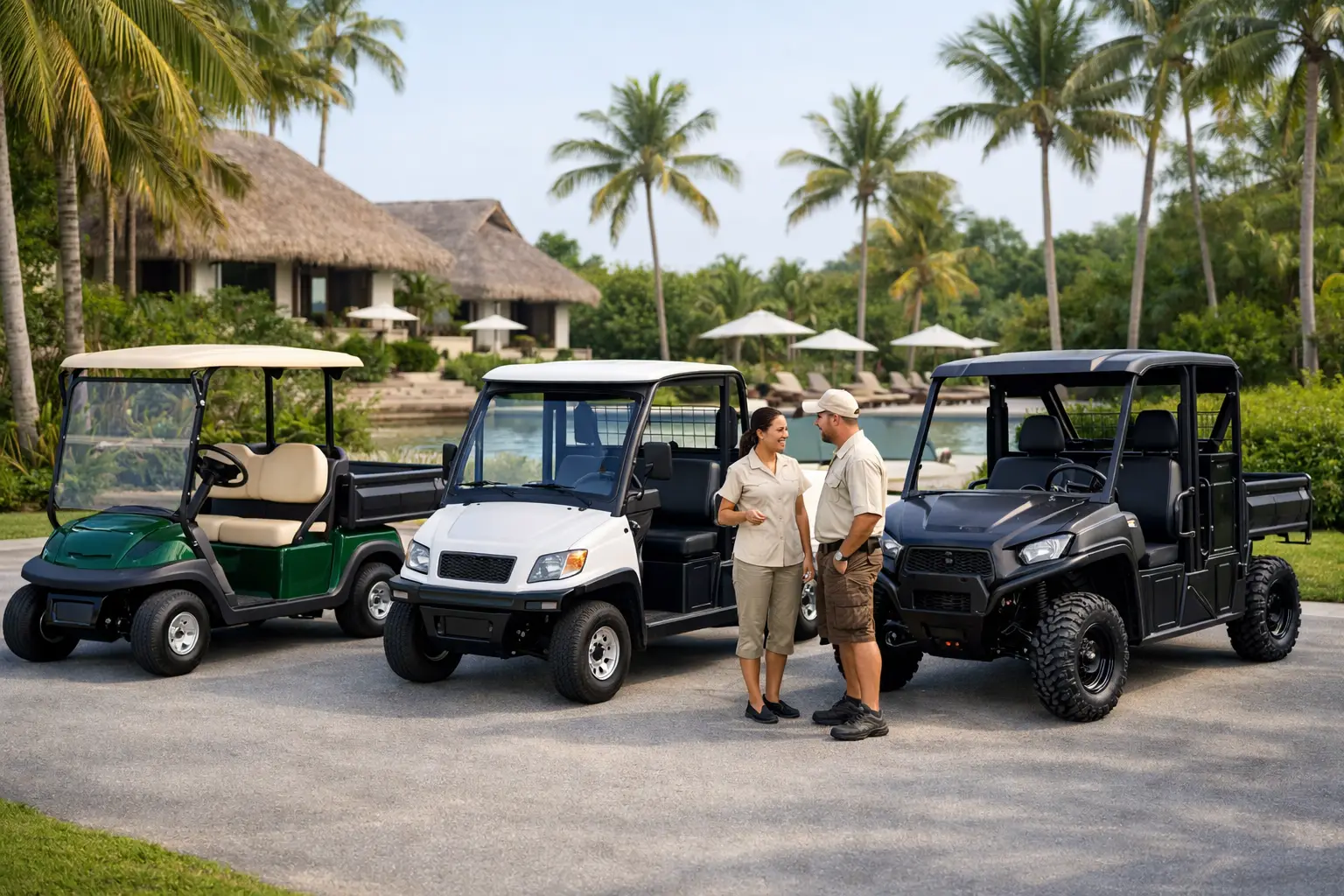
A resort team can lose a surprising amount of time in transit. Housekeeping waits on linens, maintenance makes extra trips for tools, and guest services gets slowed down by the wrong vehicle for the job. If you are trying to choose the best vehicle for resort staff, the right answer usually comes down to matching the vehicle to the work, not buying the biggest or cheapest option on the lot.
At most properties, staff transportation falls into two categories. One is people movement – supervisors, housekeeping teams, bell staff, security, and guest-facing employees moving quickly across the property. The other is work transport – hauling supplies, equipment, laundry, trash, landscaping tools, and maintenance parts. One vehicle rarely does both jobs equally well, which is why many resorts end up with mixed fleets instead of a one-size-fits-all solution.
What is the best vehicle for resort staff?
For many resorts, the best vehicle for resort staff is a commercial electric utility cart or low-speed vehicle built for daily fleet use. It is practical, easy to operate, quieter around guests, and less expensive to run than gas alternatives in many resort settings. But that does not mean every department should use the same model.
A housekeeping team working paved internal roads has very different needs than grounds crews covering rough service paths. Bell staff may need a polished, guest-friendly cart with rear cargo space, while engineering may need a tougher utility unit with a cargo bed and higher payload. The best choice depends on where the vehicle will operate, what it needs to carry, how often it runs, and whether guests will see it as part of the property experience.
Start with the job, not the brochure
The fastest way to make a bad fleet decision is to shop by appearance first. Resorts often like sleek passenger carts because they look clean and approachable, but those same vehicles can struggle if staff need to haul supplies all day. On the other hand, a heavy-duty utility vehicle may be perfect for maintenance and completely wrong for guest relations.
Think in terms of use cases. Housekeeping usually needs easy entry and exit, enough room for staff plus supplies, and a vehicle that can run quietly near rooms and villas. Maintenance teams need higher payload capacity, durability, and sometimes better suspension for uneven roads. Security often needs speed control, reliability, and enough range to patrol a full shift without interruption. Food and beverage support may need enclosed storage or layouts that keep items organized and protected.
If you assign one vehicle type to all of those roles, somebody ends up compromising every day.
The main vehicle types resorts use
Commercial golf carts
Commercial golf carts are often the first place resorts start, and for good reason. They are easy to maneuver, simple to train staff on, and well suited to paved resort environments. For supervisors, concierge teams, housekeeping runners, and light-duty operations, a quality commercial cart can be a smart choice.
Their strength is efficiency. They are quiet around guests, fit narrow paths, and usually cost less to maintain than larger fleet vehicles. They also work well when the property wants a cleaner, more polished appearance.
The trade-off is capacity. Standard golf carts are not ideal for heavier cargo, steep terrain, or all-day abuse in back-of-house operations. If your team regularly moves bulk items, tools, or waste bins, a standard cart may wear out faster and create bottlenecks.
Utility vehicles
For maintenance, landscaping, engineering, and back-of-house support, utility vehicles are often the better fit. These units are built with cargo beds, stronger frames, and higher load ratings. They are made to work, not just move people.
A utility vehicle is usually the better call when staff carry equipment throughout the day or travel on mixed surfaces. It gives departments more flexibility and reduces the temptation to overload a passenger cart.
The trade-off is that utility vehicles can feel more industrial. If guest visibility matters, some resorts prefer to limit them to service roads and employee-only areas. That is not a problem if the property layout supports separate traffic flow, but it matters if staff routes run directly through guest spaces.
Low-speed vehicles for multi-use fleets
Low-speed vehicles, or LSVs, can be a strong middle ground when resorts need a street-legal or more fully equipped option for internal roads and nearby connected areas. They often provide a more finished appearance, added safety equipment, and better suitability for mixed operational use.
For larger properties, branded communities, or resorts with adjacent staff housing and public-road access requirements, LSVs can solve problems a basic cart cannot. They may also be a better fit for department heads or staff roles that move between guest areas, service zones, and nearby off-property routes.
The trade-off is price. LSVs generally cost more upfront, and not every staff role needs that level of equipment.
Electric or gas?
In most resort settings, electric vehicles make the most sense. They are quieter, more pleasant around guest rooms, and generally easier on operating costs over time. They also align with the clean, low-noise environment most resorts want to maintain.
Electric fleets are especially effective when the property has predictable routes, overnight charging windows, and basic charging infrastructure. For housekeeping, guest services, and internal transport, electric is often the clear winner.
Gas still has a place in certain situations. If the resort covers long distances, operates on rough terrain, runs extended shifts without downtime, or lacks dependable charging access, gas utility vehicles may be more practical for some departments. Landscaping and maintenance teams on large or undeveloped properties sometimes benefit from that flexibility.
For many operators, the answer is not electric versus gas across the whole fleet. It is electric where guest comfort and routine routes matter most, and gas or heavy-duty utility units where range and workload justify it.
How many seats and how much cargo?
This is where resorts often underbuy. A two-passenger unit may seem sufficient until staff start stacking supplies in the footwell or making extra trips every shift. That adds labor cost fast.
If the vehicle is primarily for staff movement, a 2-seat or 4-seat configuration usually works. If it supports room turnover, maintenance response, or supply movement, cargo space matters more than extra seating. A rear utility box, flatbed, or enclosed cargo setup can be far more valuable than another row of seats.
The key is honest daily-use planning. How many people ride in it? What do they carry? How many trips are they making now because the current vehicle is undersized? Those answers usually point to the right configuration.
The best vehicle for resort staff by department
For housekeeping, a quiet electric cart or compact utility vehicle is usually the best fit. Staff need something nimble, easy to enter and exit, and capable of carrying linens, amenities, and cleaning supplies without feeling overloaded.
For maintenance and engineering, a utility vehicle with a cargo bed is usually the better choice. These teams need durability, payload, and enough range or runtime to handle calls across the entire property.
For bell services and guest support, appearance matters more. A well-finished commercial cart or LSV can deliver the right balance of presentation and function, especially if luggage space is built into the layout.
For security, reliability and coverage are the priority. Depending on property size, that could mean an electric patrol cart for quiet routine rounds or a more capable utility platform if the route includes rougher surfaces or longer distances.
For landscaping and grounds, a heavier-duty utility vehicle is often the safest bet. These teams put vehicles through more demanding conditions, and light passenger carts typically are not built for that kind of use.
Buying for a resort fleet means thinking past the sticker price
The cheapest unit is not always the least expensive one to own. Resorts should look at uptime, battery or engine support, parts availability, warranty coverage, and how quickly replacement units can be sourced when a fleet expands or a vehicle goes down.
That matters even more in tourism-driven markets where operations cannot pause during peak season. Buyers in places like Cabo San Lucas and San Jose del Cabo often need inventory quickly, paperwork handled efficiently, and support after delivery, not just at the point of sale. That is one reason many resort operators prefer working with a dealer that can support both fleet growth and service needs over time.
A strong fleet plan also reduces hidden labor costs. If the right vehicle saves ten minutes per shift for multiple departments, the return adds up much faster than most operators expect.
What a smart resort fleet usually looks like
Most successful resort fleets are mixed on purpose. They use polished electric carts for guest-facing staff, utility vehicles for operations, and specialty configurations where a department has specific needs. That approach costs more upfront than buying one uniform type, but it usually performs better and lasts longer because each vehicle is used within its intended role.
If you are evaluating options now, focus less on what looks versatile and more on what actually fits daily operations. The best vehicle for resort staff is the one that keeps your team moving, protects the guest experience, and holds up under constant use. If you buy with those three priorities in mind, you will make a better decision the first time.